How We Work
Redefining Honor’s care delivery platform from human to system led
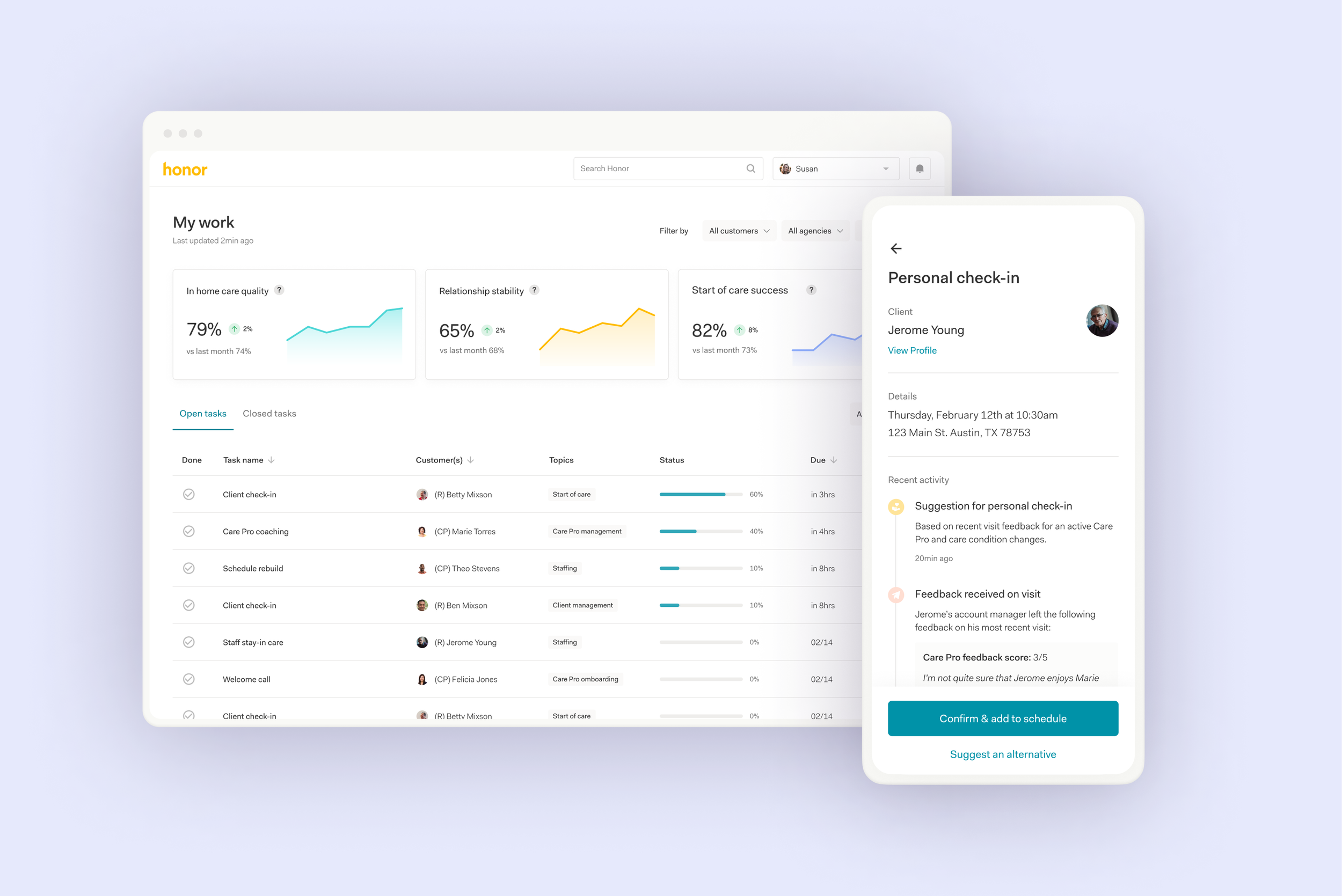
I led the radical re-frame of a core business problem initiative, developed and evangelized a long term vision leading to features & processes that solved root cause platform issues in Honor’s ability to delivery high quality care at scale.
My journeyResearch > System mapping > Problem reframe > Collaborative vision > Driving two dual workstreams > Converged MVP
My rolePrinciple product designer leading end-end design, strategy & research.
Team structure2 designers, 6 engineers, 2 data scientists, 1 researcher, 3 Care Team leaders, Product Director & CPO
Timeline6+ months
Client retention12% increase
Increase in client retention over a three month period
Impact this made
Efficiency22% increase
488hr/wk via automation, prioritization of work & reduced agency coordination
OrganizationNew platform framework
& dedicated pod
Care Pro Preparedness8% increase
Increase in visit satisfaction and client retention
OrganizationNew client manager role expectations & KPIs
Problem space
Honor is the world’s largest home care network, providing nearly 1 million hours of care weekly through its advanced care platform. In 2021, Honor acquired Home Instead, the largest home health care franchise network in the U.S.
Post-acquisition, some agencies were hesitant to transfer their operations to Honor due to their deep client relationships, causing inefficiencies as they continued to co-manage operations.
Our goal was to streamline these coordination efforts to effectively integrate more agencies into the platform.
Honor's user ecosystemImage
Outcome
We effectively eliminated the need for manual coordination all together and through the client coordination pilot we were able to distill which high-touch workflows were critical to scale using our the new platform framework.
Prioritizing a care team member’s day
The core building block of the framework is a centralized work queue which systematically prioritizes work into a single dynamic queue for an operational member and eliminats the need to support nearly 5+ unique dashboards that were most commonly referenced.
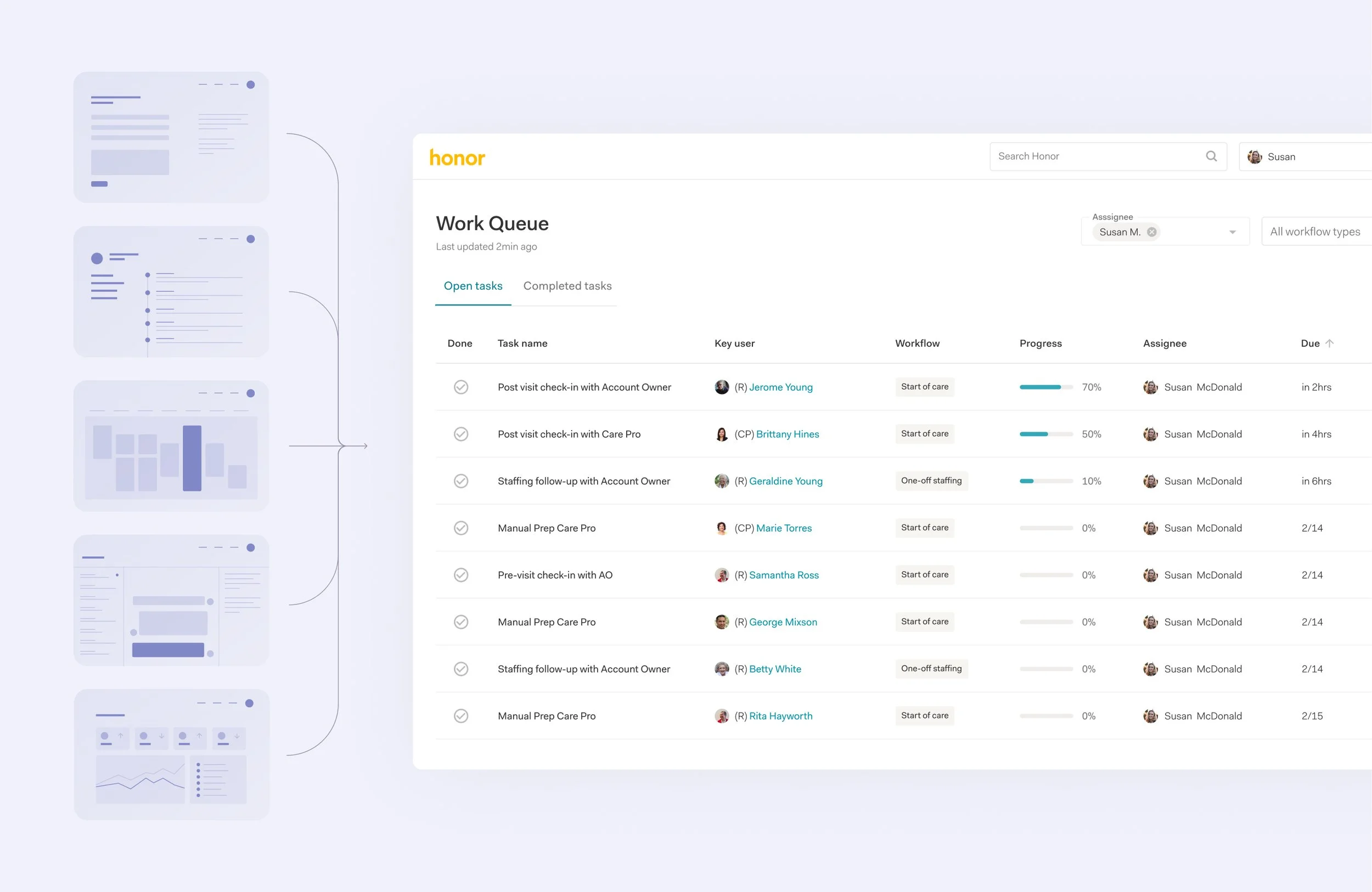
Guided workflow for efficient task completion
Operational members were empowered to work through these select tasks in one centralized view versus navigating across 12+ pages on the platform to investigate, prioritize, document & complete the work.
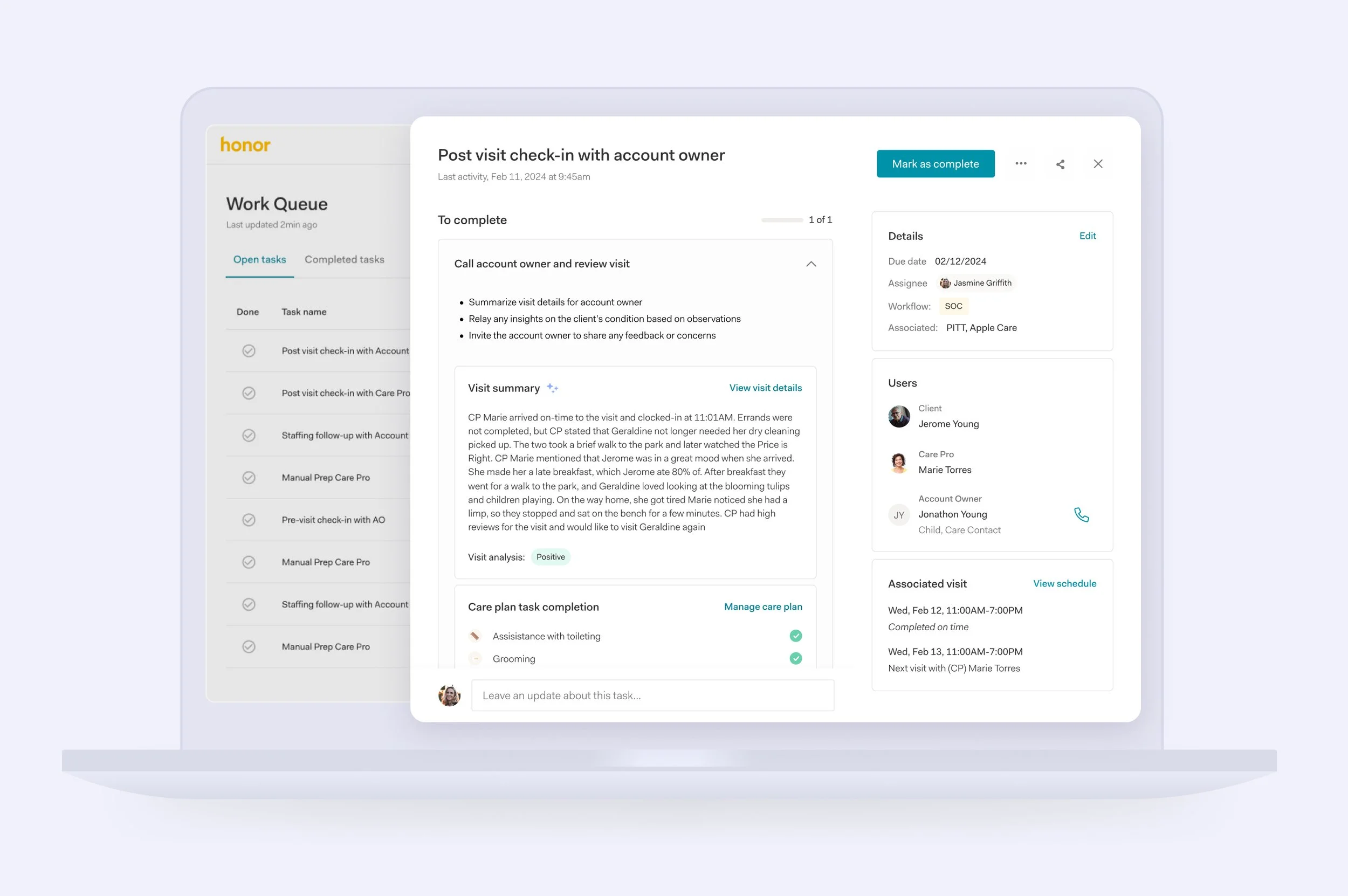
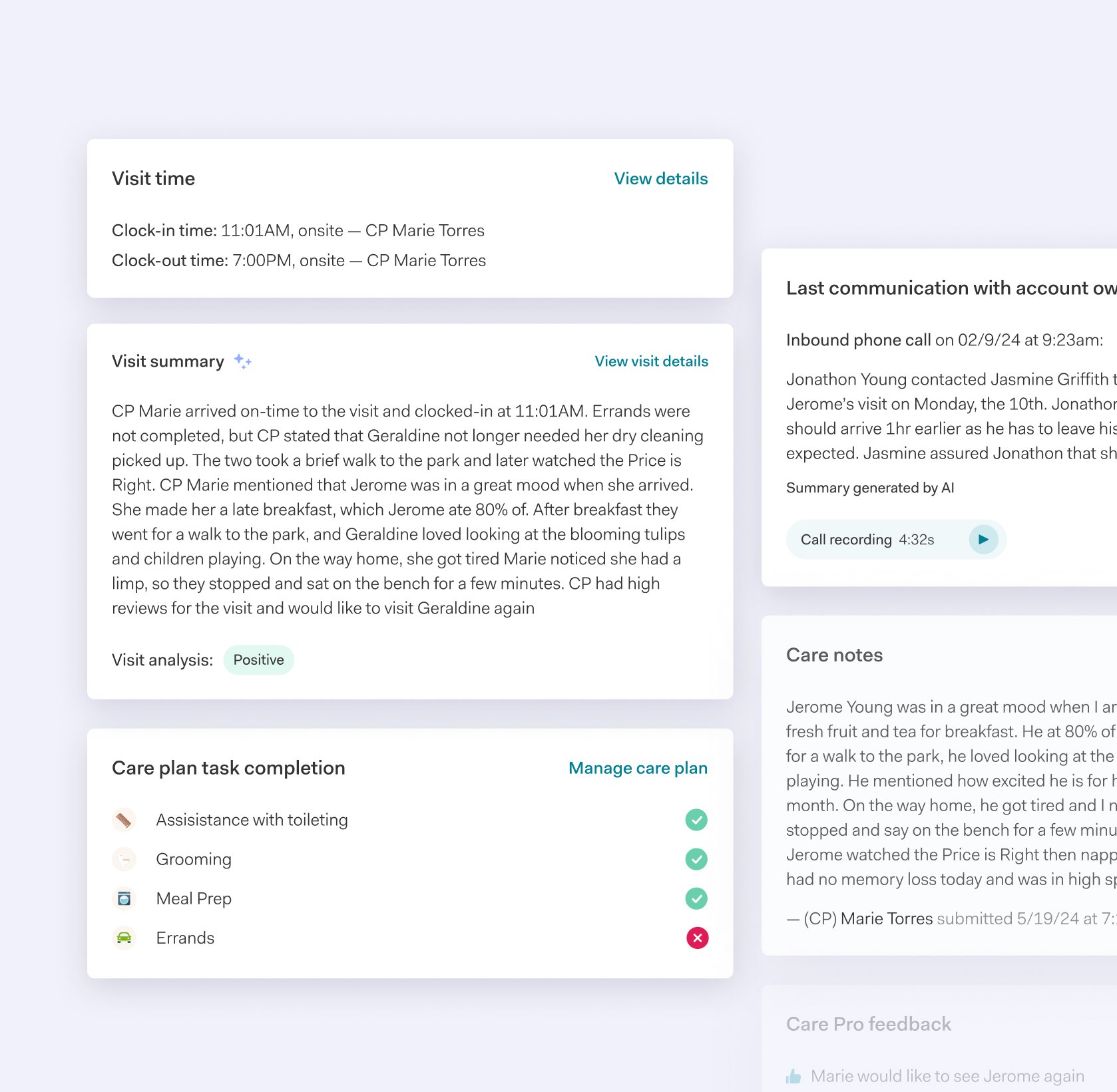
Supporting centralization by modularizing data needs
We modularized contextual data that was most commonly needed to complete the initial workflows and ~80% of anticipated future workflows on the platform.
Alleviating operational bottlenecks by promoting self-service workflows
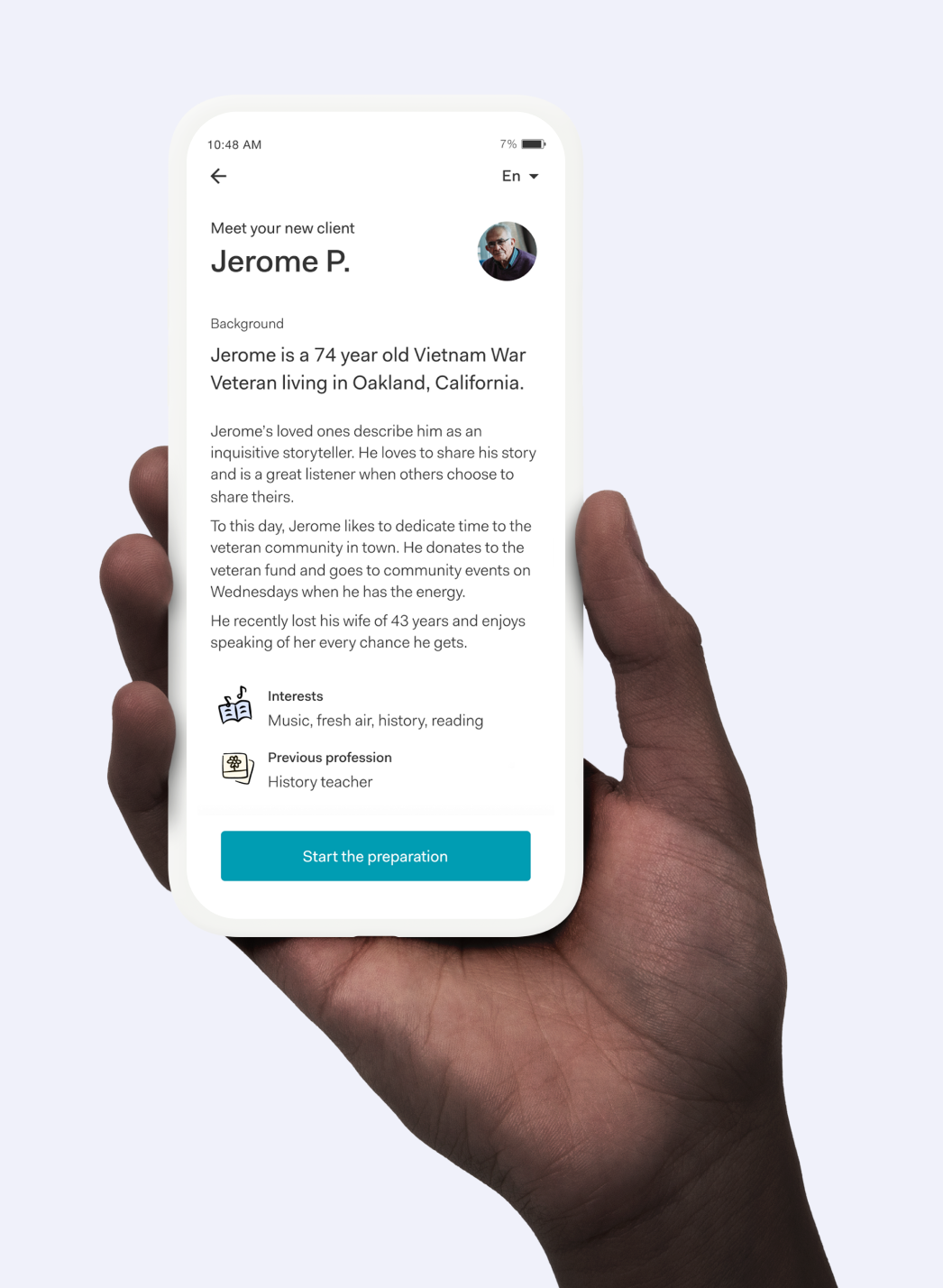
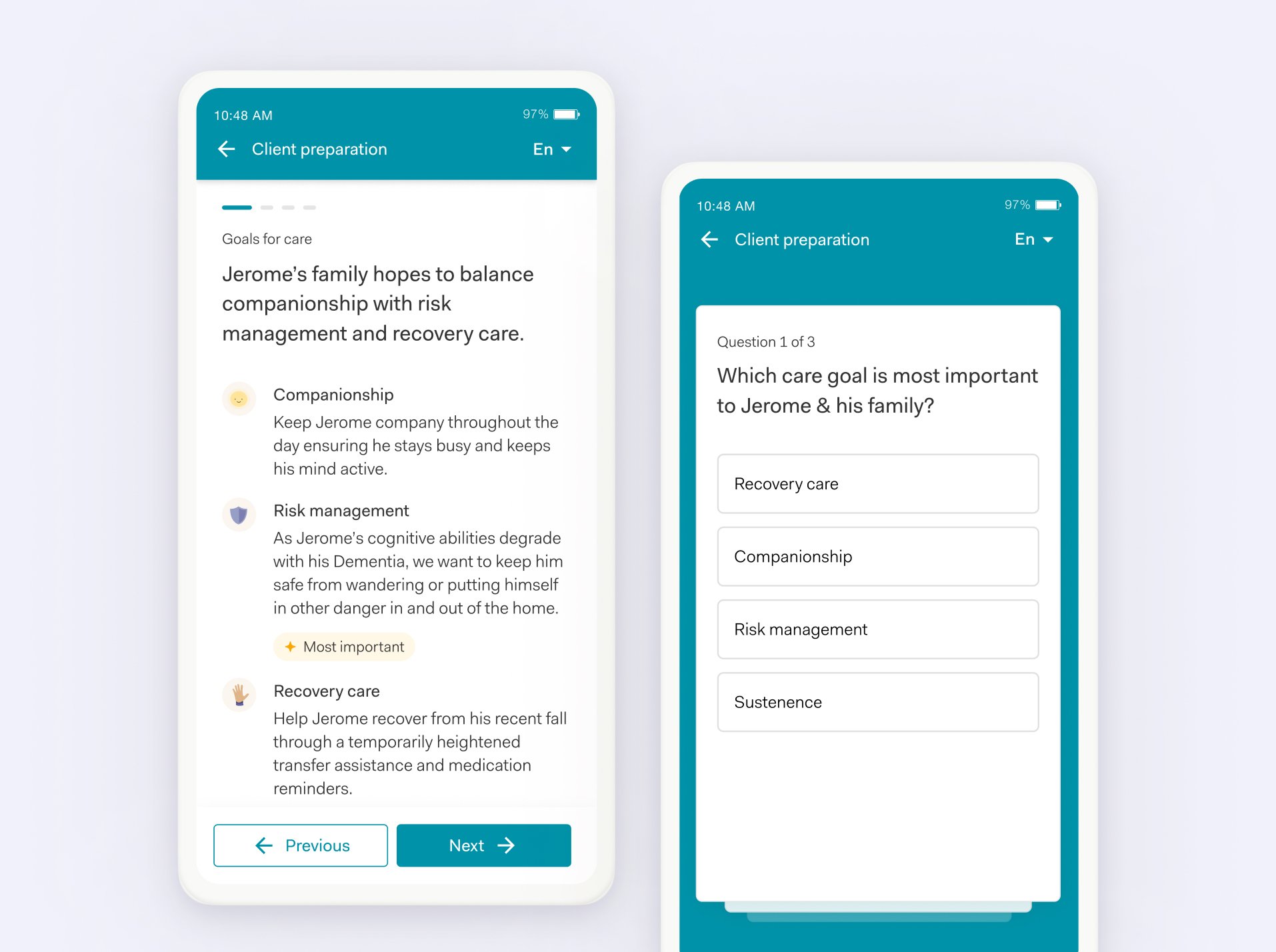
We redesigned our existing caregiver visit preparation workflow to increase engagement, preparedness of visits to drive better care delivery and client experiences. This was our first external task using the new framework which reduced the need for operations to manually prepare caregivers via phone call or text messaging.
Ensuring back-up support in care delivery
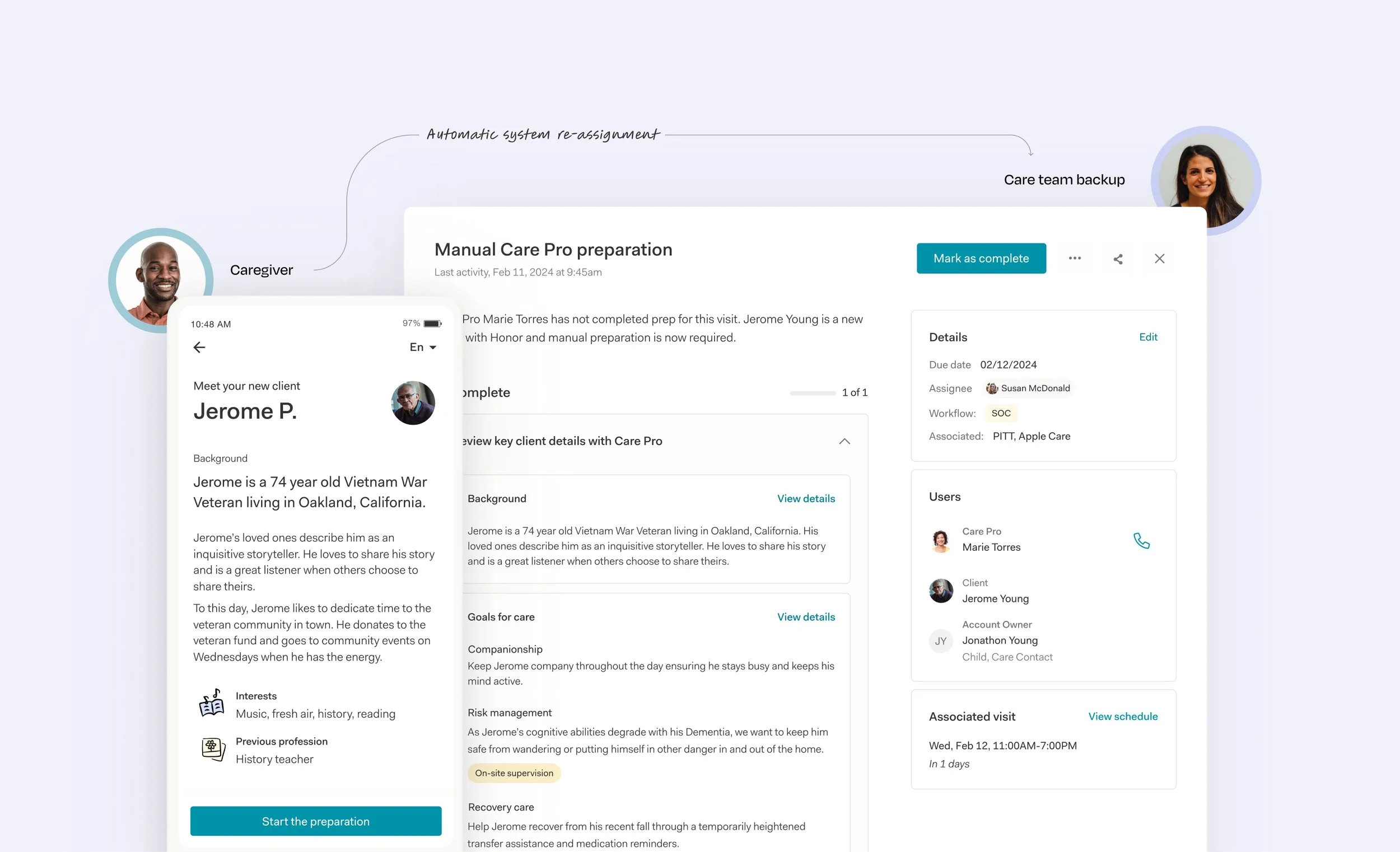
The new framework is now able to detect if key workflows aren’t externally completed by due date and will automatically re-assign internally to our care operations team to ensure that quality care is always delivered.
DiscoveryMy drive to solve for root cause
Being familiar with this problem during my tenure at Honor, and even designing a few features that scratched the surface, I wanted to make sure we really understood why we haven’t solved this in the past. This is how I drove & led the discovery the process:
✴ Assesed past learnings by looking through every historical research project, past workshops and feature metrics Honor had shipped regarding agency coordination pains.
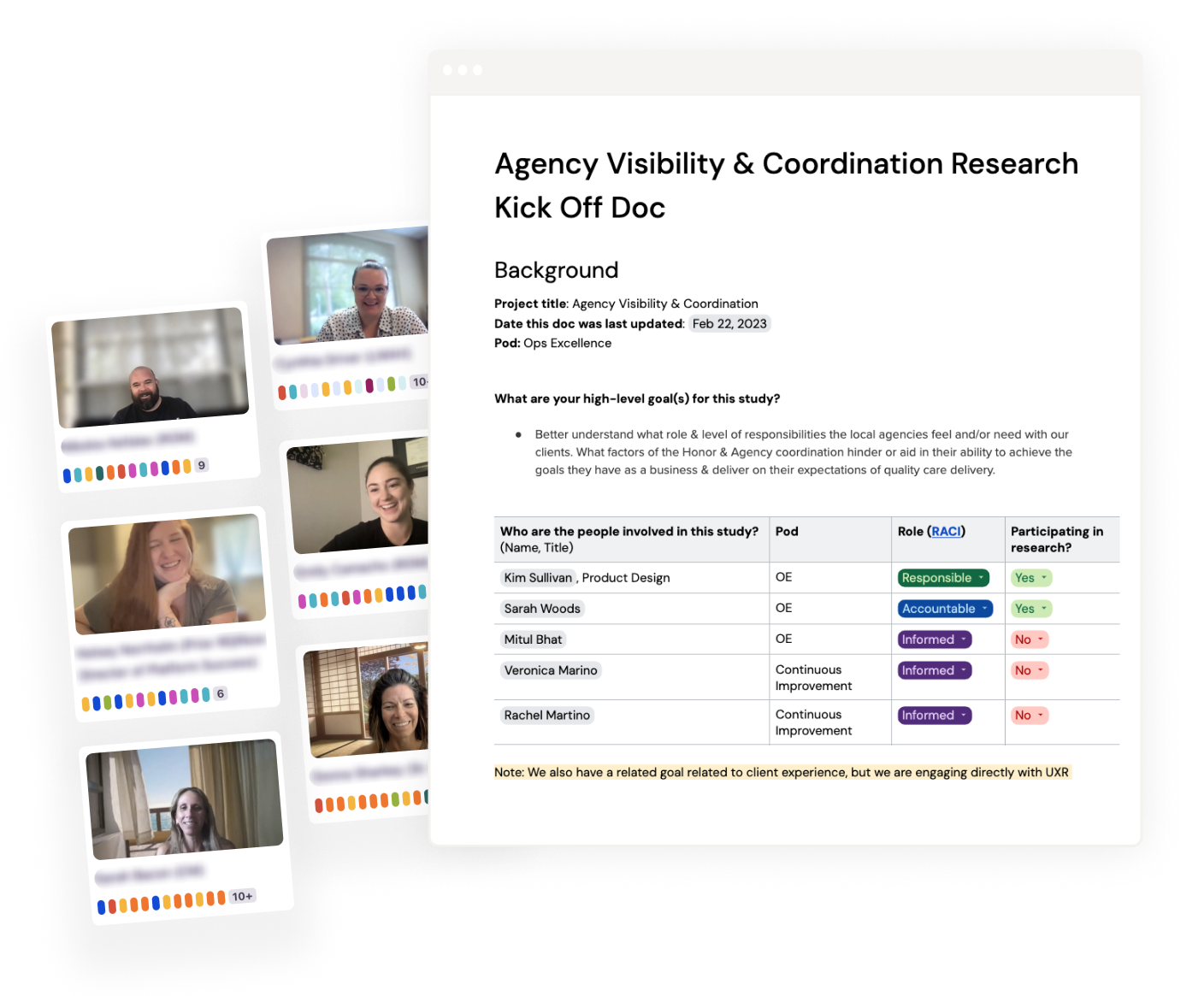
✴ Developed, led and conducted qualitative interviews and shadow sessions with ~14 internal care team members and 4 agency operational partners to better understand what was happening in the coordination space today.
✴ Paired with data to validate and clarify my time study findings based on my shadow sessions to understand time to task.
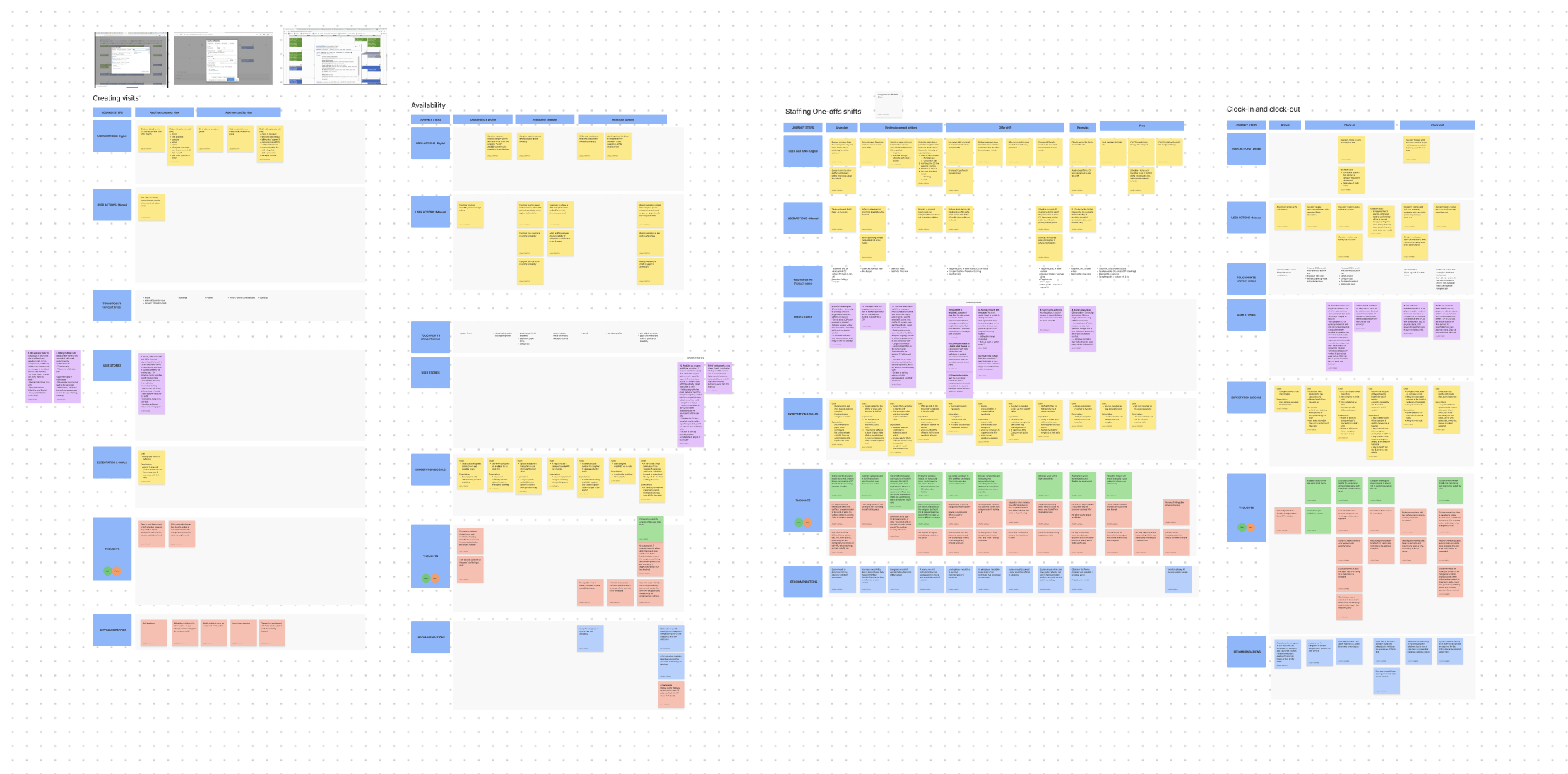
Insights started to emerge
Broken connections
60% of the care team work is untracked, most coordination & client updates are done via external tooling creating gaps in understanding.
Inconsistencies
60% of the care team work is untracked, most coordination & client updates are done via external tooling creating gaps in understanding.
Lack of trust
Agencies are over-involved in care delivery because we have not proven that we can consistently deliver a good experience.
Lack of prioritization
20% of time is spent simply figuring out what to do next, causing lags in proactive care, coordination & real time updates.
The pivotAligning leadership on the real problem
As my insights began to emerge, it became obvious that our customer voice was missing from the research. This much needed side of the story could inform what aspects of dual operations either negatively or positively impacted client trust and satisfaction with Honor.
I paired with our head UXR (the amazing, Rose Kue) for a deep dive into our client service experience — something Honor had fundamentally never had the capacity to do, but was a critical unlock in my discovery work.
Our study uncovered that not only were a large subset of clients unfamiliar with the Honor & HomeInstead partnership, many were deeply unsatisfied with their new care delivery service through Honor, specifically, the lack or personalization and high-touch care that naturally might not come from a 24/7 operational company.
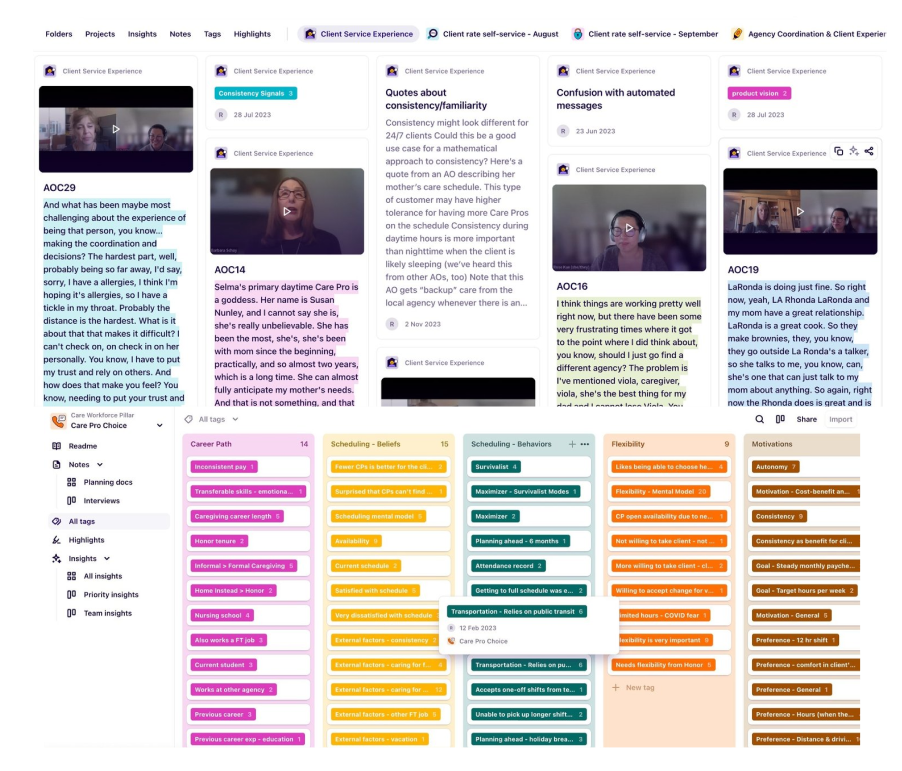
Snippet of our Client Service Experience synthesis
I do, I think that this whole company should be rearranged to make it more personal and more safe for these elderly people.
— Family member of client
“
Along with these new findings, I knew I need I needed to visually articulate how complex our system & operational model was — and the overreaching impact it’s having on our client satisfaction and retention.
This helped me to draw emphasis to the system level nuances & defects we have — highlighting those as direct results of inefficiency and loss in client retention.
System map I created to articulate key challenges in our coordination patterns between unique agencies & central operations team
Something felt off…
Coordination & visibility felt like a symptom of a larger problem and we’re missing the critical perspective from the most important voice - our clients.
and distilling it down to this…
We needed to reverse engineer the problem. The only way to reduce agency over site, that was resulting in inefficient coordination, was to gain the trust of our agencies. To do this, I used the above discovery to align our leadership partners on the following:
Our distributed team & platform can not handle quality client care delivery at scale.
CollaborationEnvisioning the north star for scaling quality care
To convey broad concepts of the future we were tasked with coming up with a vision what quality at scale meant. Beyond product, it akjdflakjdflkasdjflasdjf…
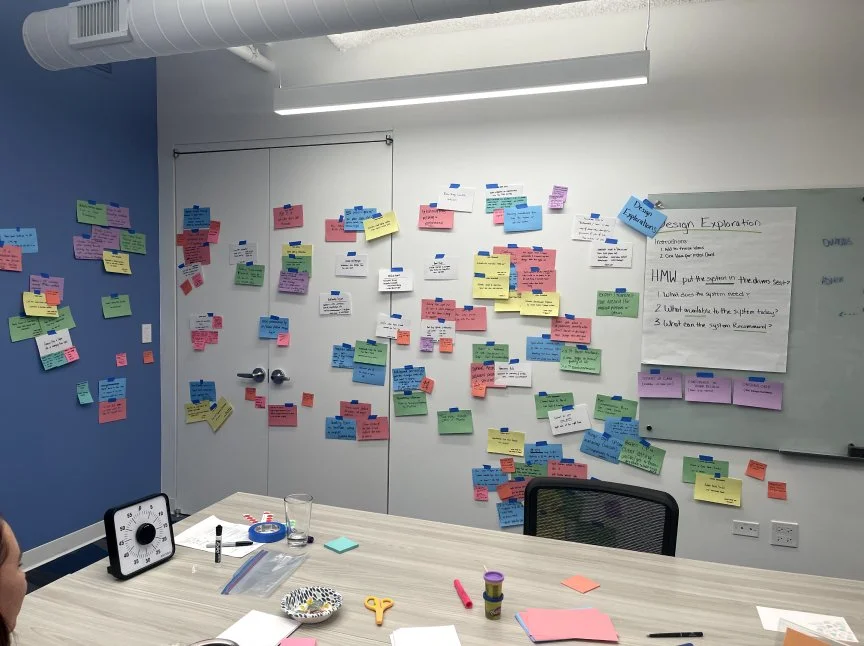
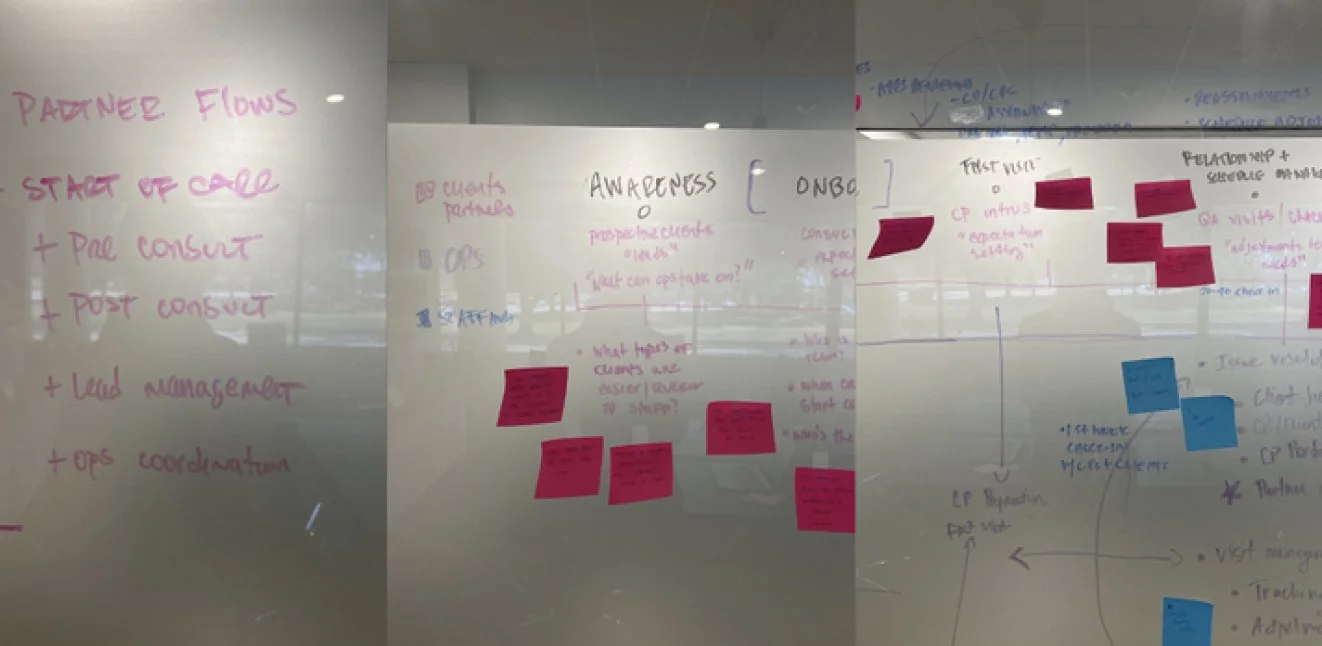
Images taken during my 2 day facilitated brainstorm session with other design leads
Here is some messaging around getting buy in and collaborating with other design leads. This was a system wide intiative to fix and I needed to make sure that together we were definying system wide defects and such. Northstar opportunity space:
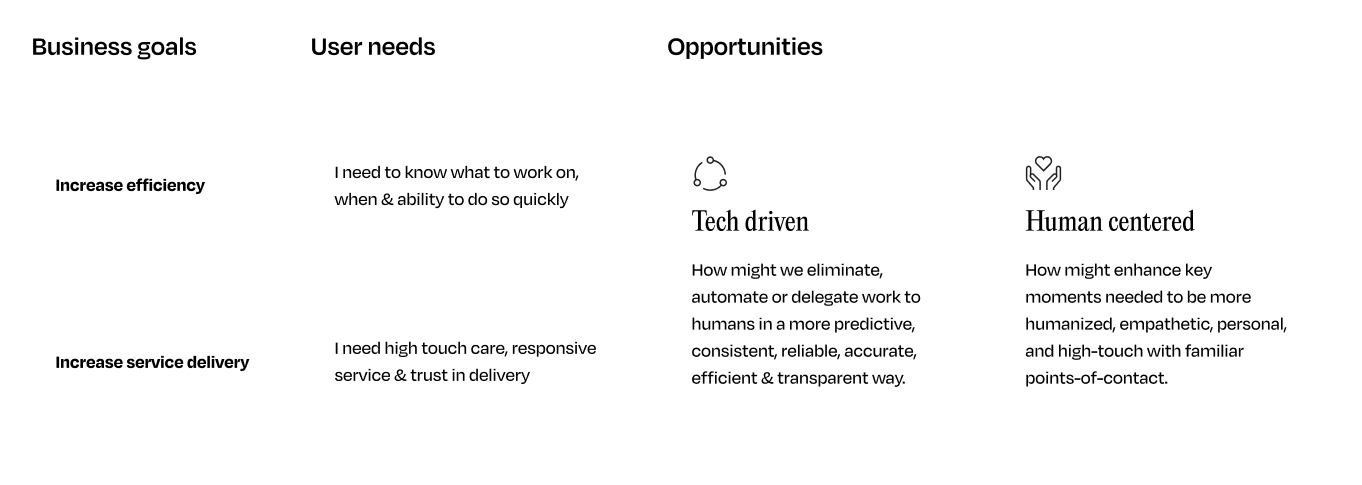
Here is some messaging around getting buy in and collaborating with other design leads. This was a system wide intiative to fix and I needed to make sure that together we were definying system wide defects and such.
Check out the Figma to get a feel for how I think and work through complex system & problem spaces.
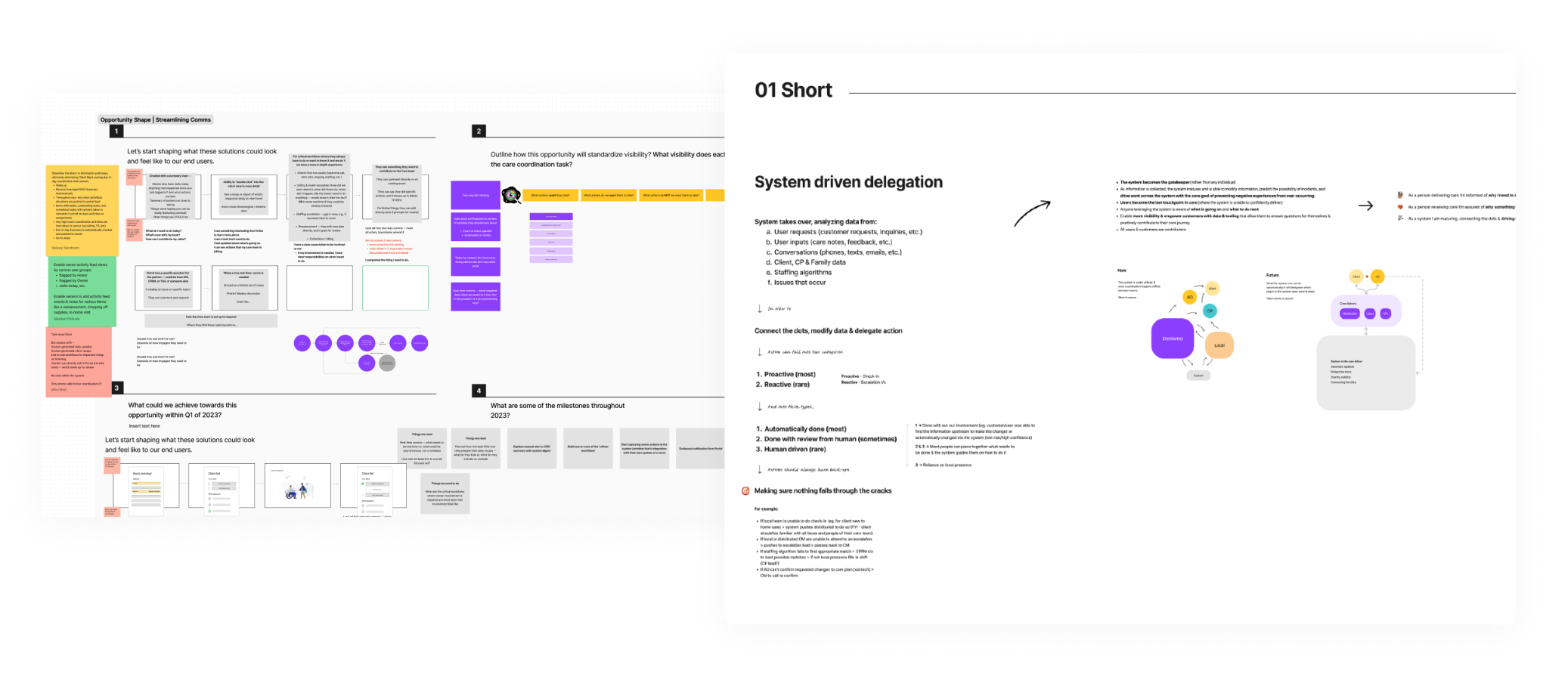
Here is some messaging around what this meant and what it laddered up to in terms of visioning work…
VisionArticulating the future of Honor
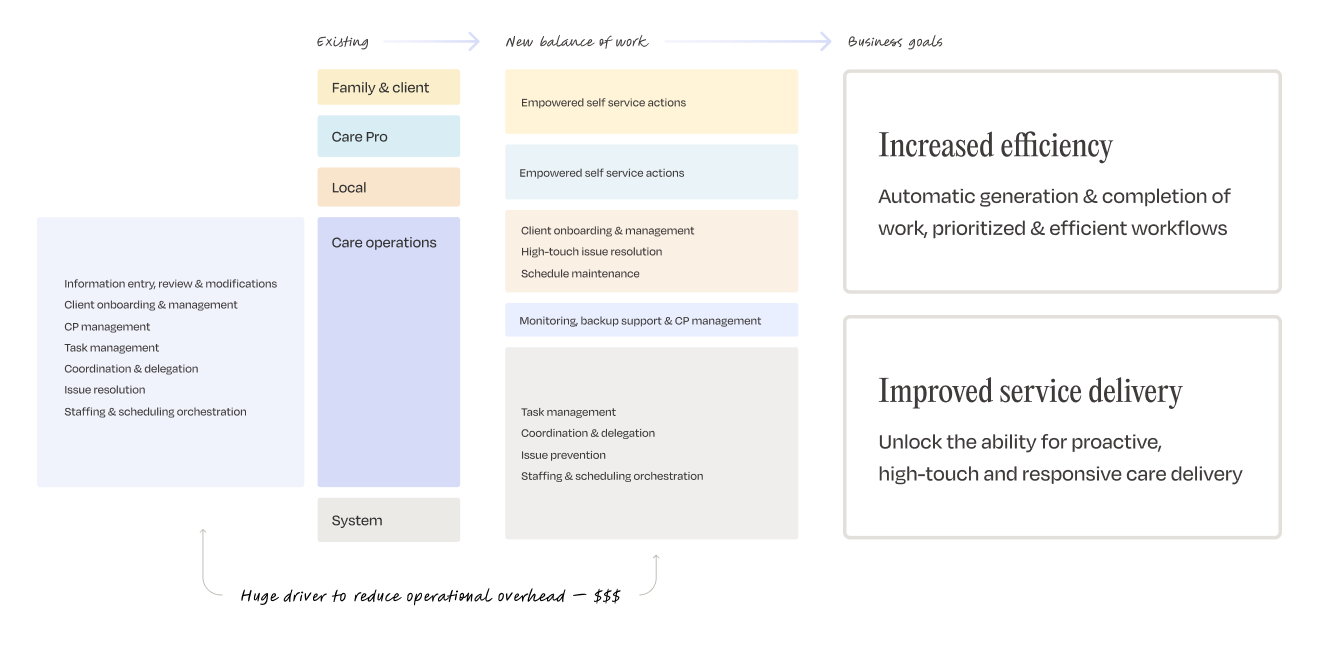
Enabling the system to generate and drive work across the platform
By analyzing data, inputs & communications, the system is able to automate most work with little review. The rare human driven work that remains is proactive, high-touch & delivers at the most impactful moments of the client journey.
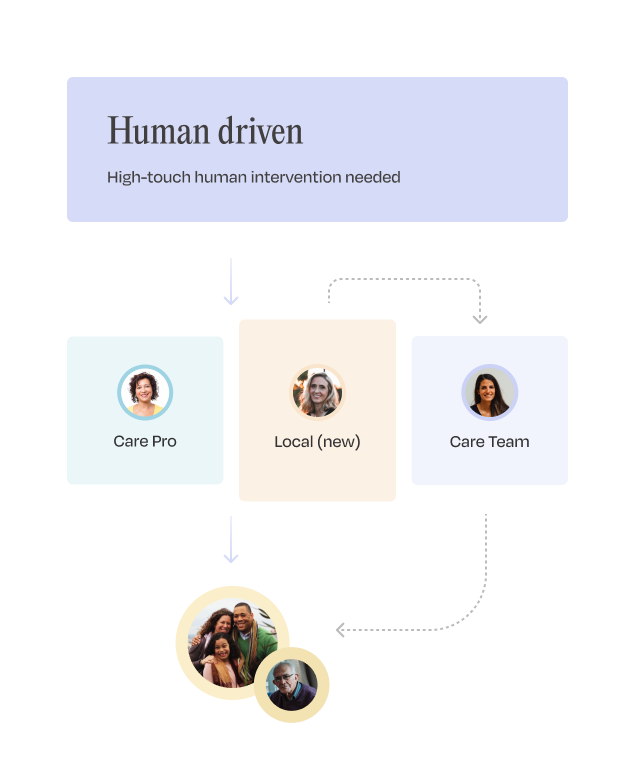
Ensuring the right people, get the right work at the right time
The system will designate which player does what & when, with appropriate back-ups, ensuring nothing falls through the cracks. The rare things that need human intervention should be personal — driving a great client experience.
Orchestrating and empowering users to guide their own care delivery
The system will designate which player in the does what & when, with appropriate back-ups, ensuring nothing falls through the cracks.
Making operations no longer a bottleneck — but backup support
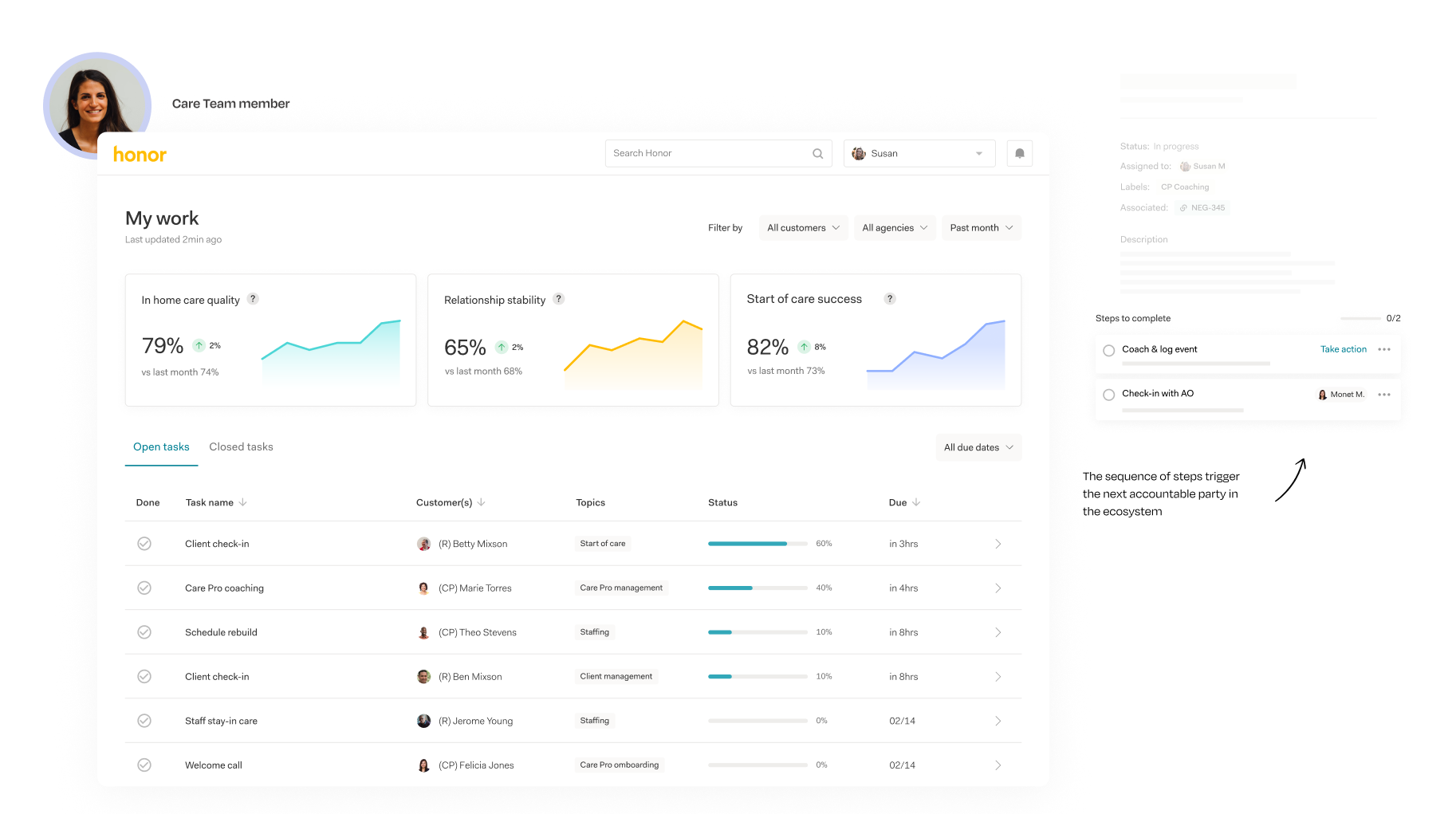
Shifting the weight of the work from operational led to system led
How we got buy in to move forward — gif?
Iteration & developmentBringing the vision to life through technology & service evolutions
We split this into two core workstreams which I oversaw and led the aim being… stand up a proof of concept and build out the tech aspects of this new system the second being to pilot a new way of managing clients that solved suystem defects. etc.
Reduce this down (1) tech brainstorm (2) piloting high touch client management (show diagram)
Add in goals of tech driven + human led here