Redefining a care delivery platform from human to system led
I led the reframe of a core business problem, creating and evangelizing a long-term vision that addressed root platform issues, enhancing Honor's ability to deliver high-quality care at scale.
My journeyResearch > System mapping > Problem reframe > Collaborative vision > Driving two dual workstreams > Converged MVP
My rolePrinciple product designer leading end-end design, strategy & research.
Team structure2 designers, 6 engineers, 2 data scientists, 1 researcher, 3 Care Team leaders, Product Director & CPO
Timeline6+ months
Background
Honor is the world’s largest home care network, providing nearly 1 million hours of care weekly through its advanced care team & platform. Honor helps smaller home health care agencies run their everyday operations which may include staffing, client management, billing, caregiver recruiting and beyond. This allows agencies to invest in the growth of their business.
In 2021, Honor acquired Home Instead, the largest home health care franchise network in the U.S. expediting Honor’s ability to grow both nationally & globally.In 2021, Honor acquired Home Instead, the largest home health care franchise network in the U.S. expediting Honor’s ability to grow both nationally & globally.
Honor's user ecosystem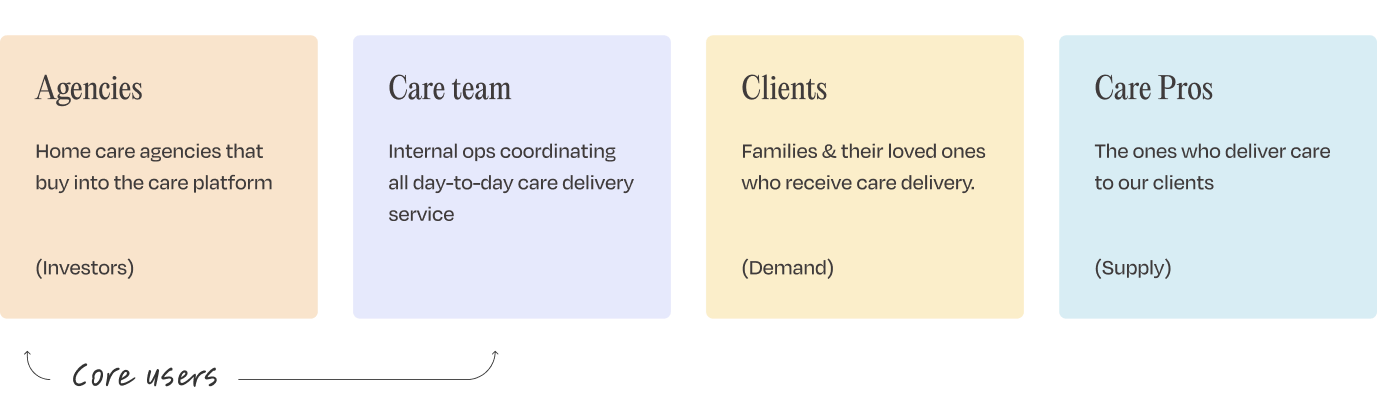
Challenge & role
Post-acquisition, some agencies were hesitant to transfer their operations to Honor due to their deep client relationships, causing inefficiencies as they continued to co-manage operations. This remained a challenging space that Honor continuously tried to solve for and in late 2023 it became a main focus area for the product development team. I came in as the lead designer for this space and was tasked with spearheading efforts to significantly reduce manual coordination in order to effectively integrate more agencies into the platform.
As a principal designer I was responsible for leading discovery across the system, specifically, identifying root cause issues across our complex operational teams, agency partners & clients that would help drive a new path forward in this recurring problem space. This ultimately resulted in me developing, evangelizing & iterating towards a long term vision which centered on creating a system driven product & service focused on delivering high-touch client care and instilling agency trust to eliminate the need of coordination rather than to optimize it.
Identifying Root Cause
I drove the research and discovery for this initiative by first assessing our past learnings from features and process changes we had developed in the past. I then developed, led and synthesized 12+ interview and shadow sessions across our internal operations & agency partners. In addition, I paired with our data teams to validate and quantify time spent in the coordination space.
What was largely unknown was what our clients’ were experiencing working with two operating partners and how that impacted our ability to both retain and attract new clients.
I paired with our head UXR (the amazing, Rose Kue) for a deep dive into our client service experience — something Honor had fundamentally never had the capacity to do, but was a critical unlock in my discovery work.
The findings were critical in how I reframed the problem space for our leadership team.
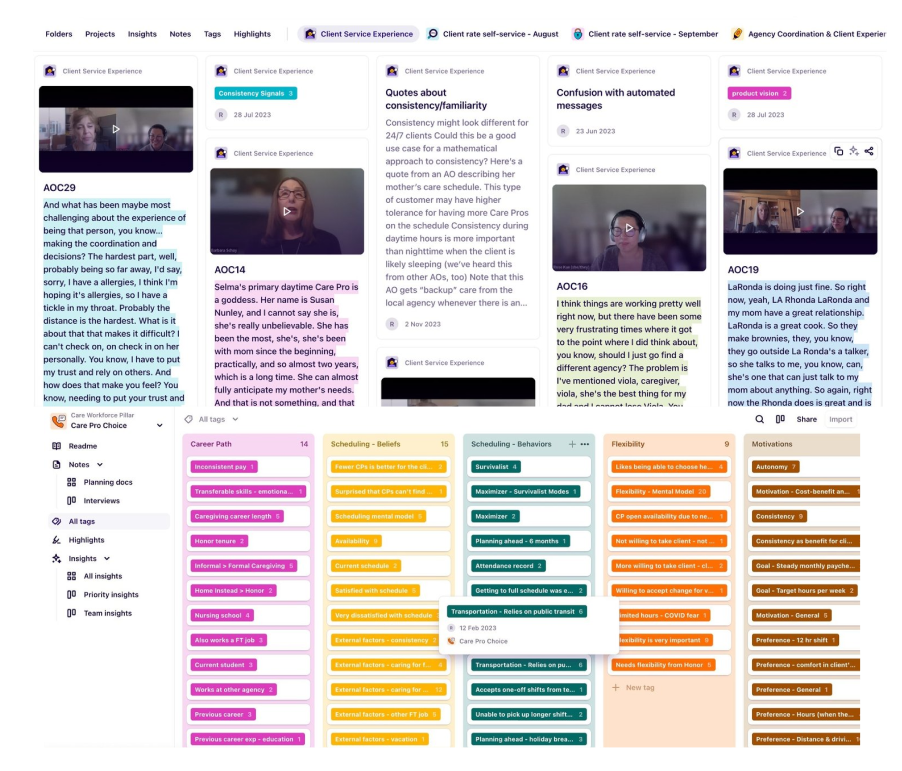
Snippet of our Client Service Experience synthesis
I do, I think that this whole company should be rearranged to make it more personal and more safe for these elderly people.
— Family member of client
Something felt off…
Coordination & visibility felt like a symptom of a larger problem and we’re missing the critical perspective from the most important voice - our clients.
Impact this made
Client retention12% ↑
Increase in client retention over a three month period
Efficiency22% ↑
488hr/wk via automation, prioritization of work & reduced agency coordination
Care Pro Preparedness8% ↑
Increase in visit satisfaction and client retention
OrganizationNew platform pod & framework
Evolved client manager role & KPIs
and distilling it down to this…
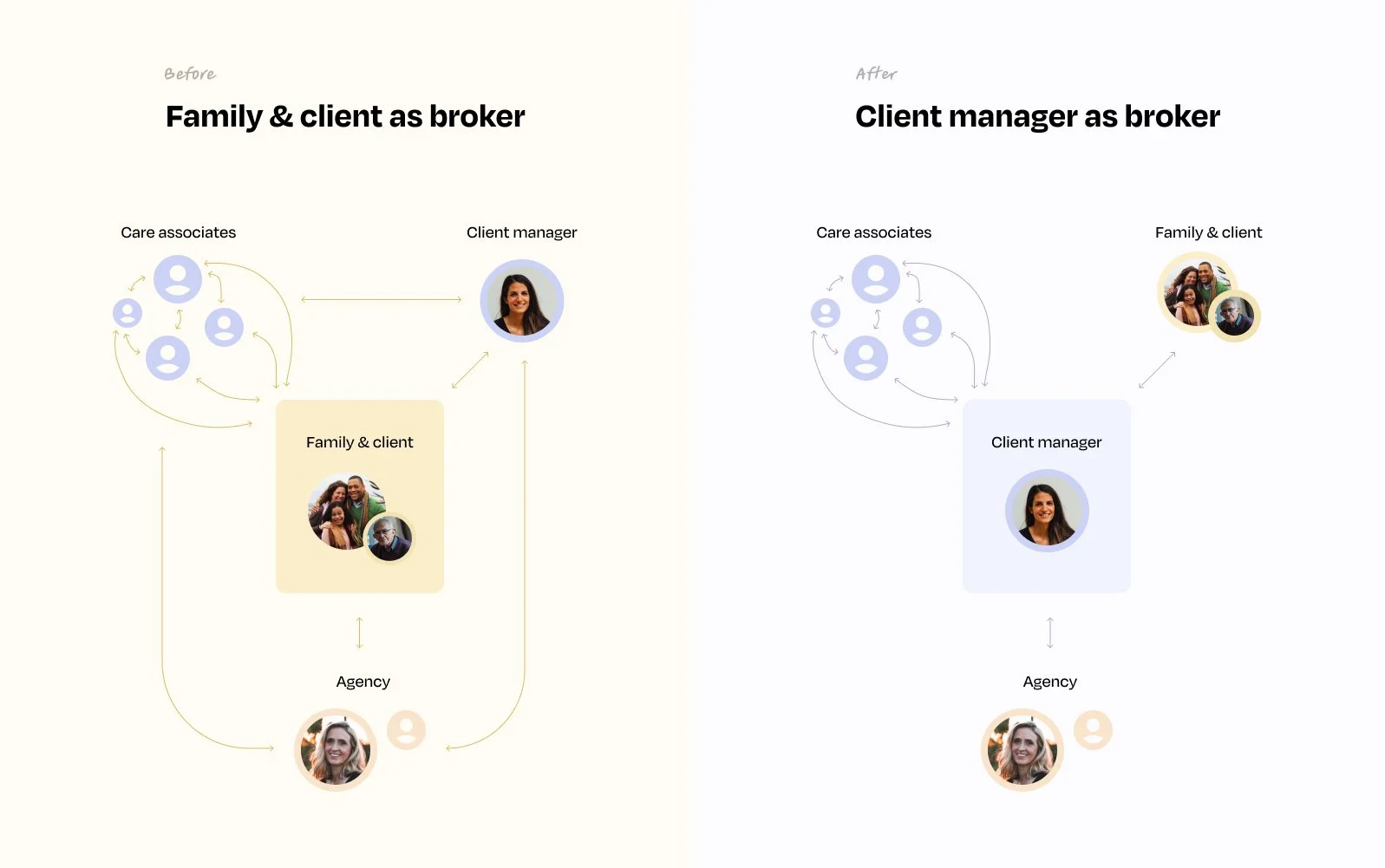
We needed to reverse engineer the problem. The only way to reduce agency over site, was to gain the trust of our agencies. To do this, I used the above discovery to align our leadership partners on the following problem:
Our distributed team & platform can not handle quality client care delivery at scale.
CollaborationEnvisioning the north star for scaling quality care
To convey broad concepts of the future we were tasked with coming up with a vision what quality at scale meant. Beyond product, it akjdflakjdflkasdjflasdjf…. (LOOK AT SARAH’S DECK)
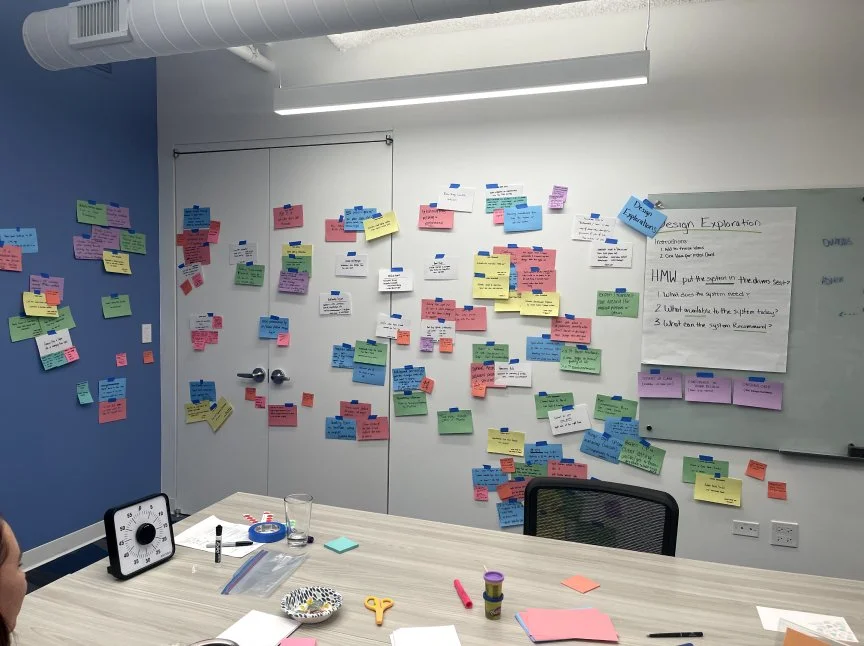
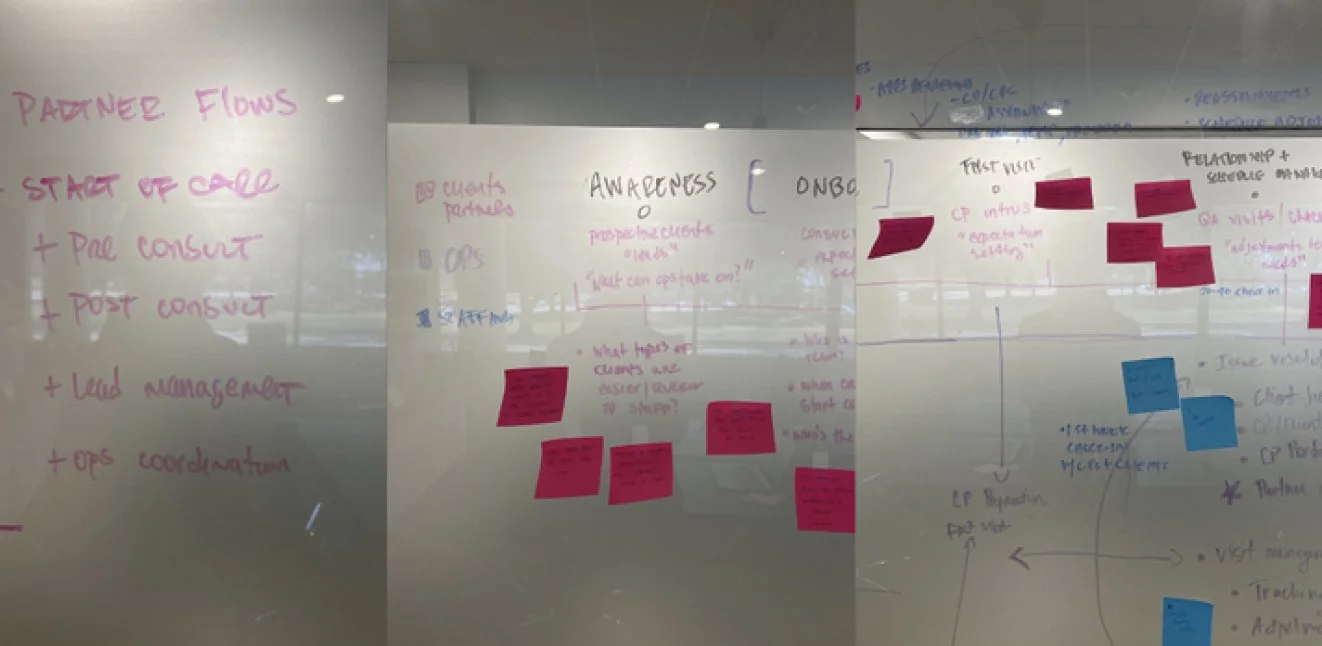
Images taken during my 2 day facilitated brainstorm session with other design leads
Here is some messaging around getting buy in and collaborating with other design leads. This was a system wide intiative to fix and I needed to make sure that together we were definying system wide defects and such. Northstar opportunity space:
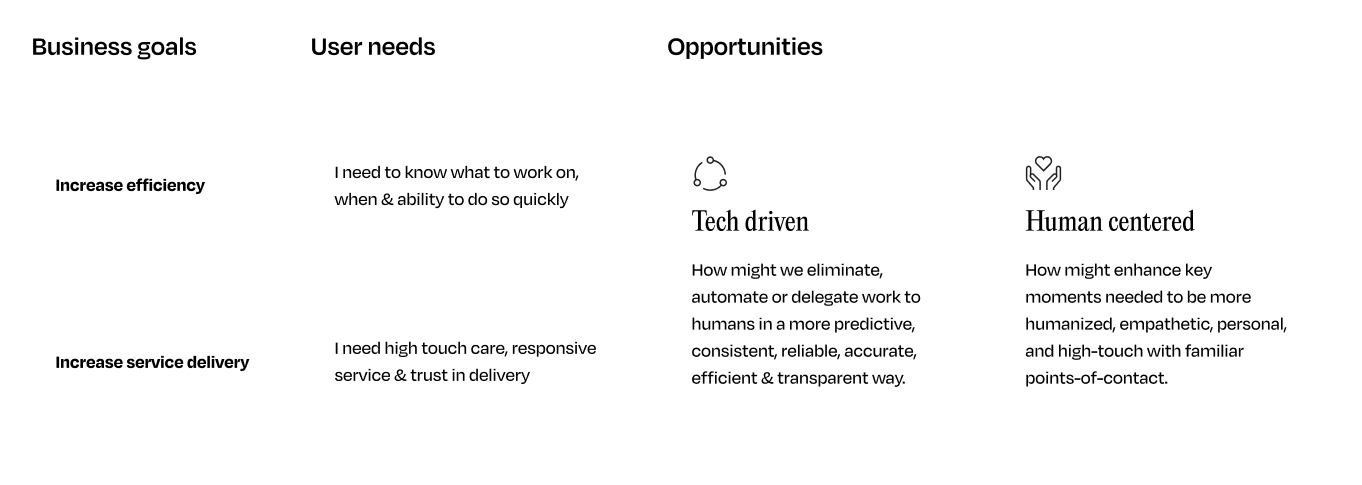
Here is some messaging around getting buy in and collaborating with other design leads. This was a system wide intiative to fix and I needed to make sure that together we were definying system wide defects and such.
Check out the Figma to get a feel for how I think and work through complex system & problem spaces.
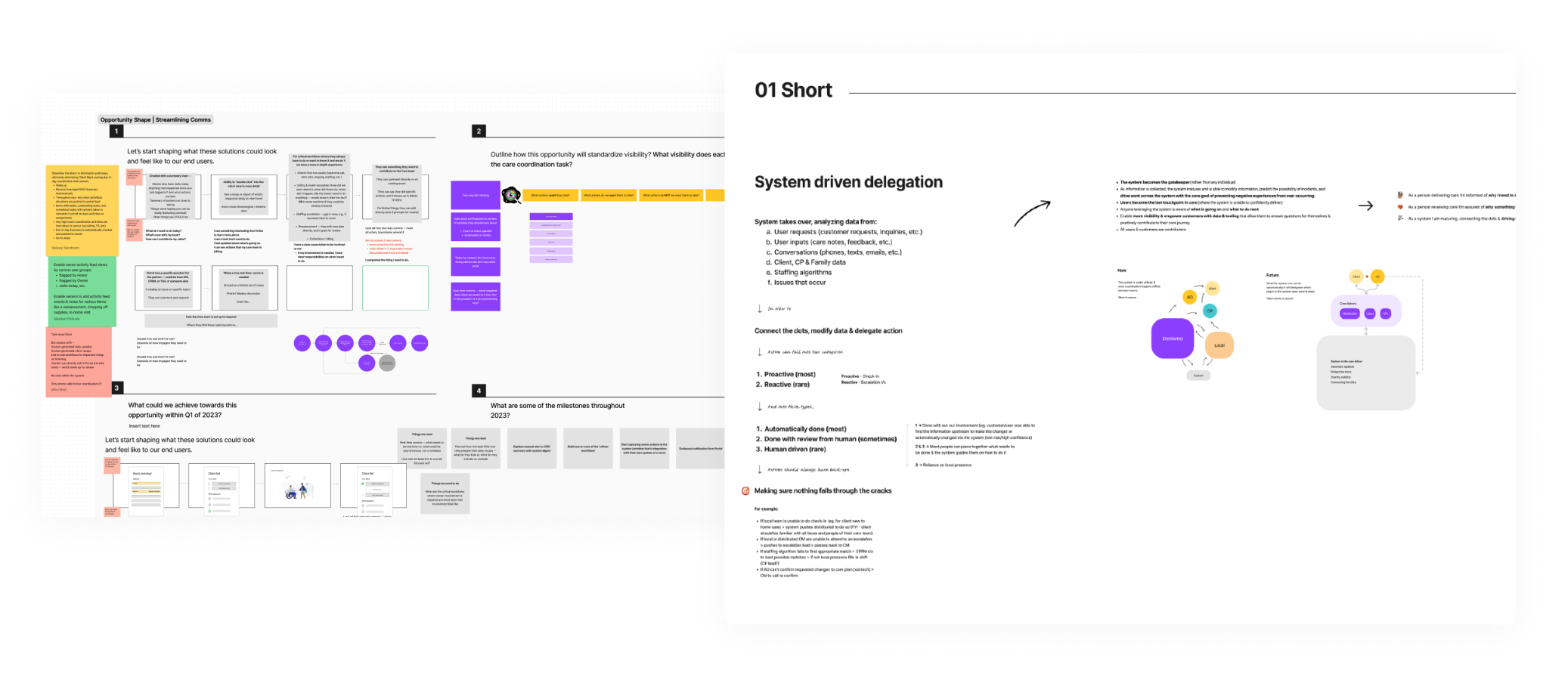
Here is some messaging around what this meant and what it laddered up to in terms of visioning work…
VisionArticulating the future of Honor
Enabling the system to generate and drive work across the platform
By analyzing data, inputs & communications, the system is able to automate most work with little review. The rare human driven work that remains is proactive, high-touch & delivers at the most impactful moments of the client journey.
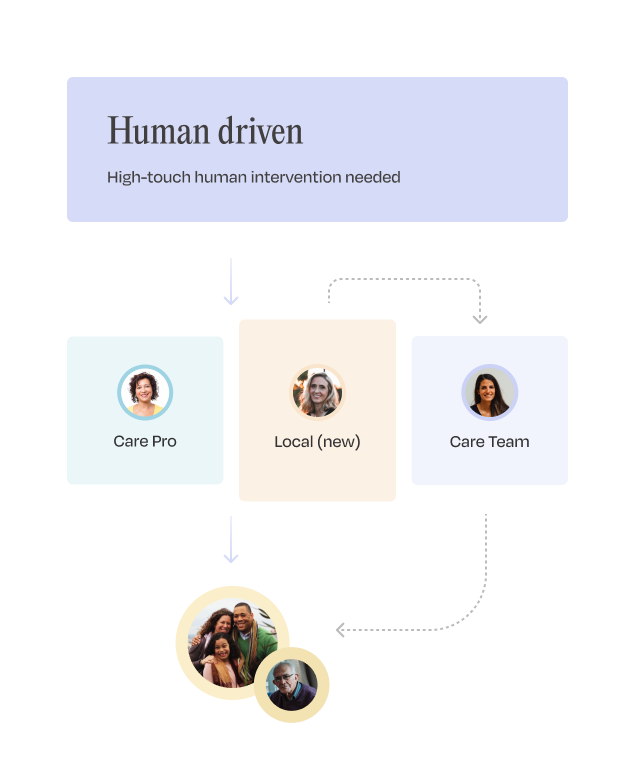
Ensuring the right people, get the right work at the right time
The system will designate which player does what & when, with appropriate back-ups, ensuring nothing falls through the cracks. The rare things that need human intervention should be personal — driving a great client experience.
Orchestrating and empowering users to guide their own care delivery
The system will designate which player in the does what & when, with appropriate back-ups, ensuring nothing falls through the cracks.
Making operations no longer a bottleneck — but backup support
Shifting the weight of the work from operational led to system led
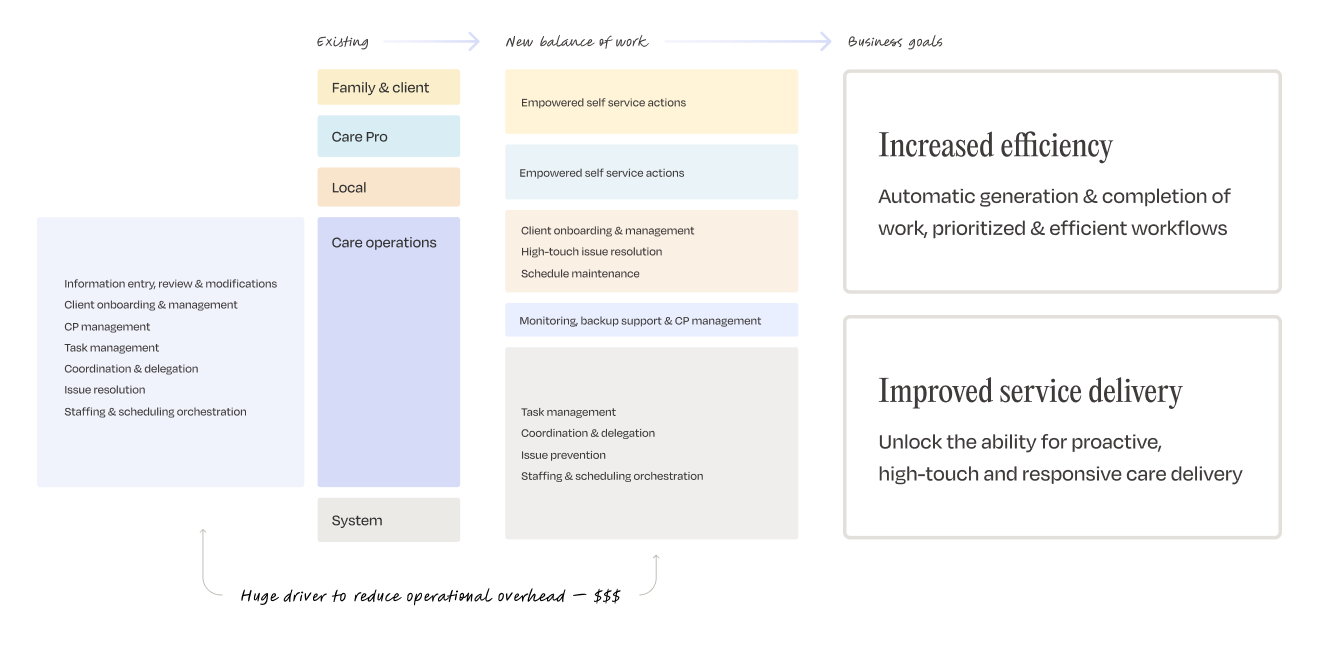

By emphasizing and highlighting the potential reduction in operational costs with this long term approach, it was easier for leadership to accept further investment & resources in this area.
Iteration & developmentBringing the vision to life through technology & service evolutions
To incrementally test how this new framework could move us closer to our goals we broke the work into two core work streams:
01 Building the proof of concept
Our goal with this workstream was to evolve and develop an initial proof of concept for testing with internal users. I collaborated closely with engineering leads to define the data model for the new framework, while also creating visual concepts to guide the other designer on how this framework could manifest in both our internal and external products.
02 Developing high-touch behaviors
One of our key insights kajfdlkajdfkjasdfklasjfklasdfjklasdfjklasdfjklsadfjkasdjflksadfjalskdfjsalkfjsakldfjksaldfjaklsdjfkadsfj
Applying these learnings
Add in the success rate from the pilot + marrying the two concepts together we used the pilot to indentify which workflows were critical in scaling…
Pre & post visit
Manual Care Pro preparation
OutcomeDriving high-touch care delivery with the system driven work delegation
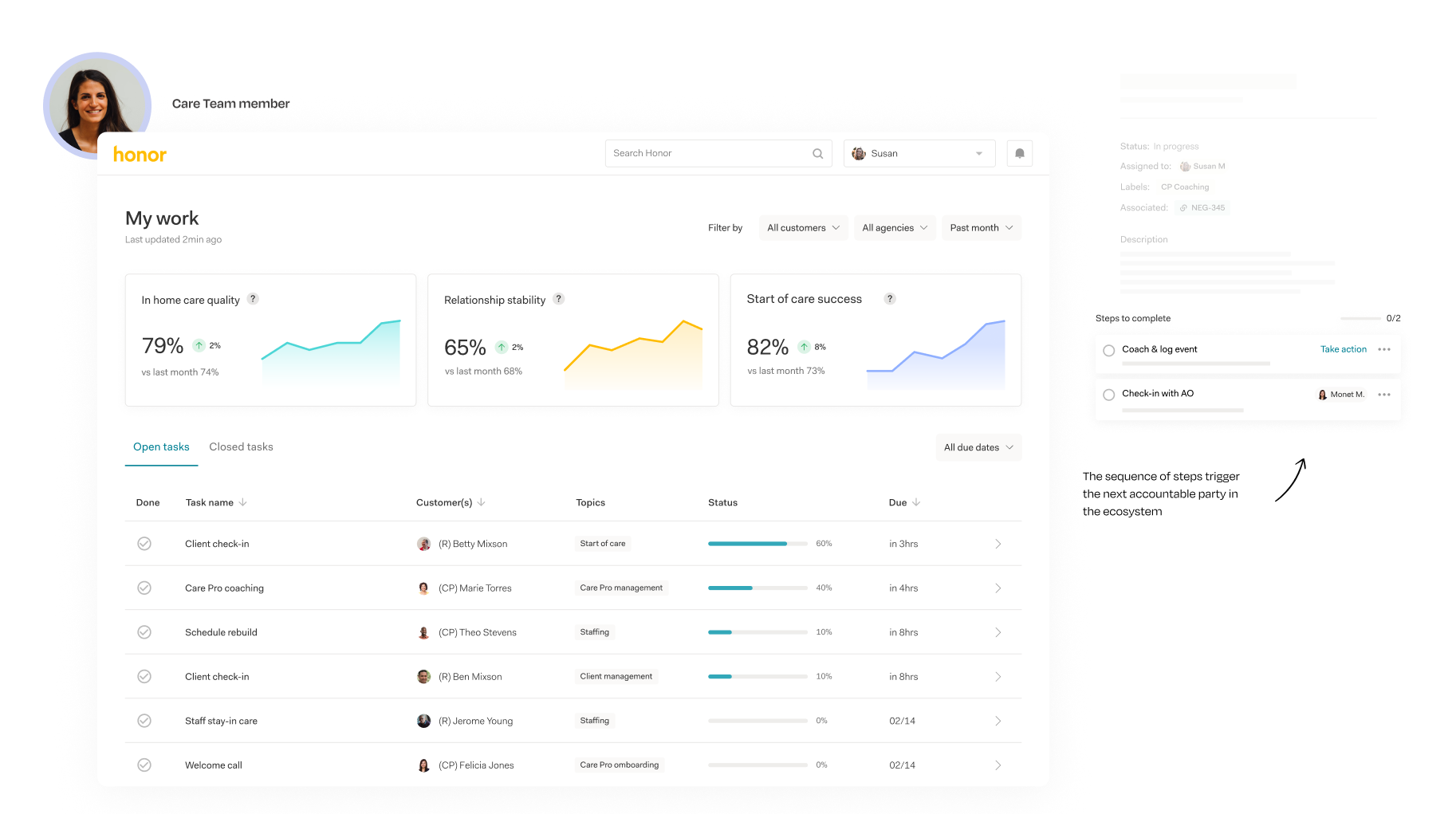
Systematically driving & prioritizing a care team member’s day
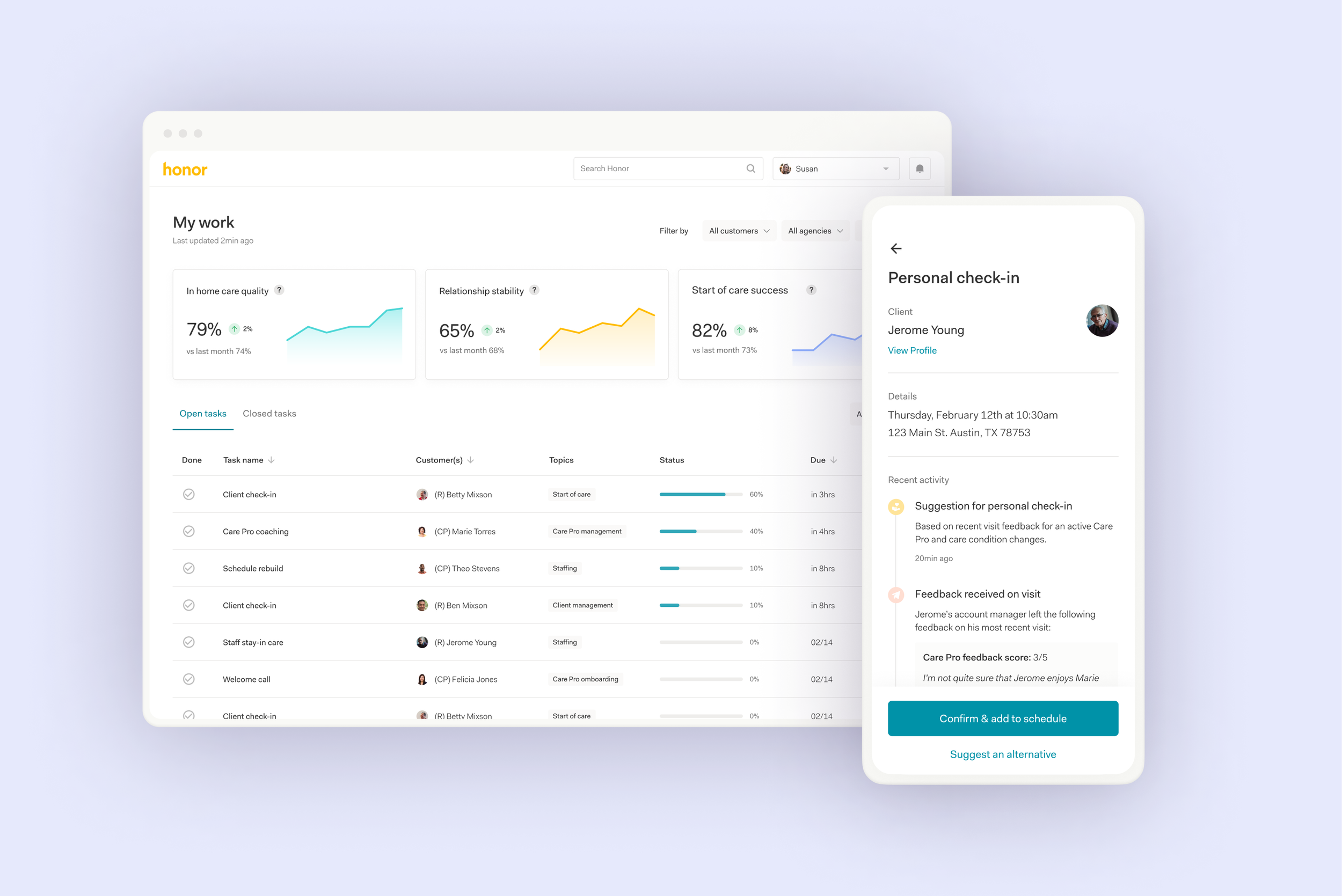
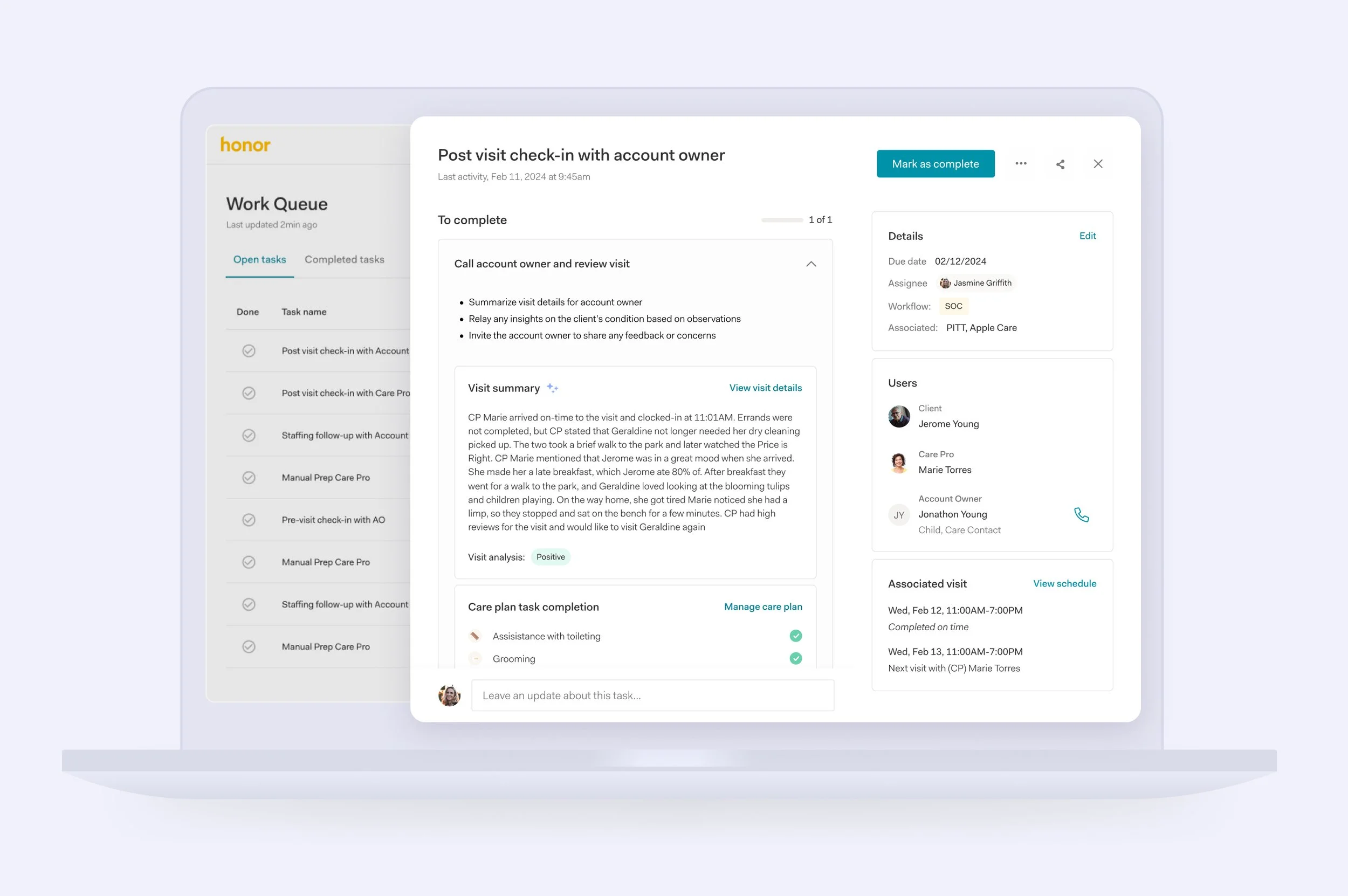
The core building block of the framework is a centralized work queue which systematically creates & prioritizes work into a single dynamic queue for an operational member and eliminates the need to support nearly 5+ unique dashboards that were most commonly referenced. This queue would house the initial high-touch workflows we built out.
Guided workflow for efficient task completion
Operational members were empowered to work through these select tasks in one centralized view versus navigating across 12+ pages on the platform to investigate, prioritize, document & complete the work.
Supporting centralization by modularizing data needs
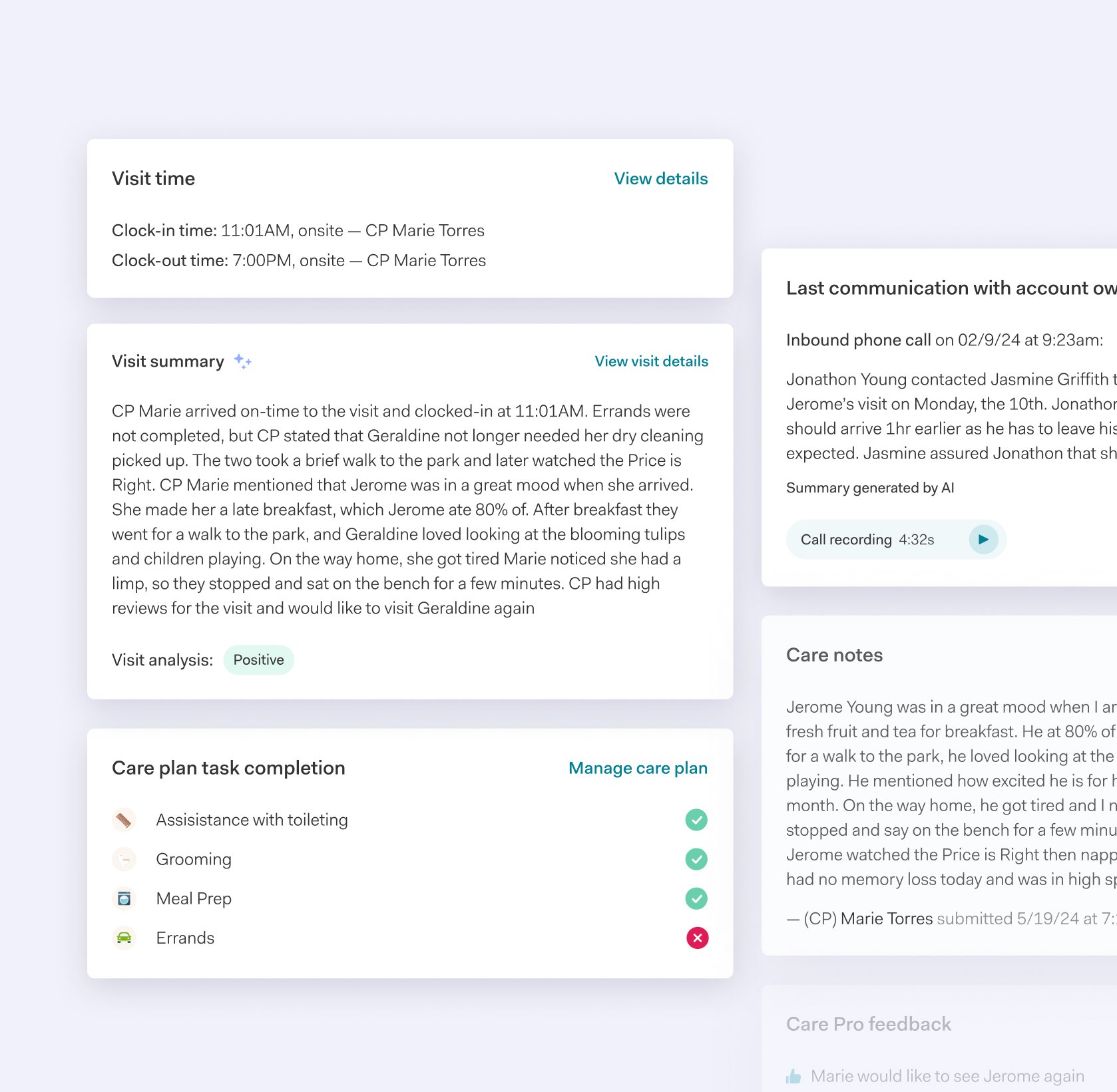
We modularized contextual data that was most commonly needed to complete the initial workflows and ~80% of anticipated future workflows on the platform.
Alleviating operational bottlenecks by promoting self-service workflows
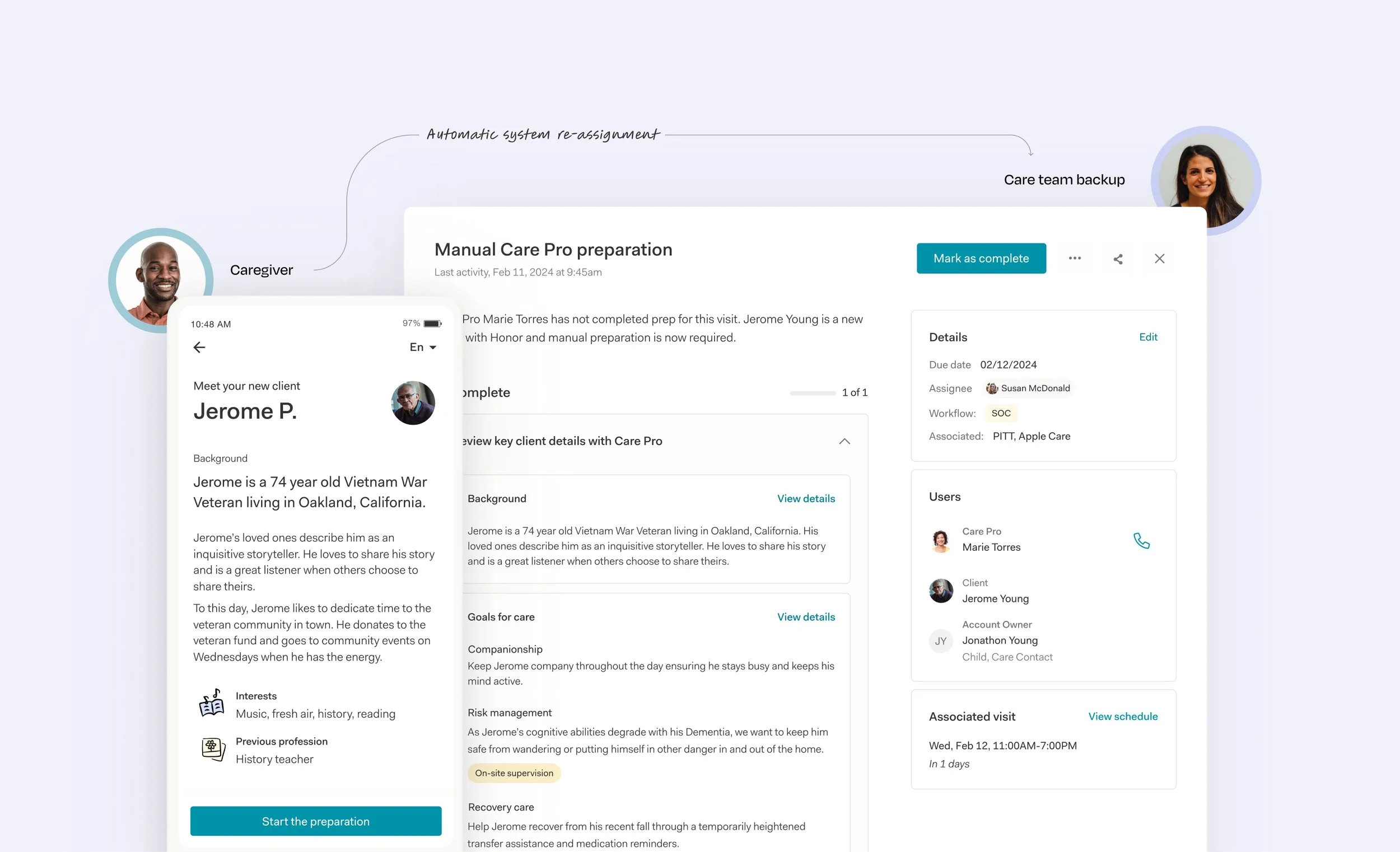
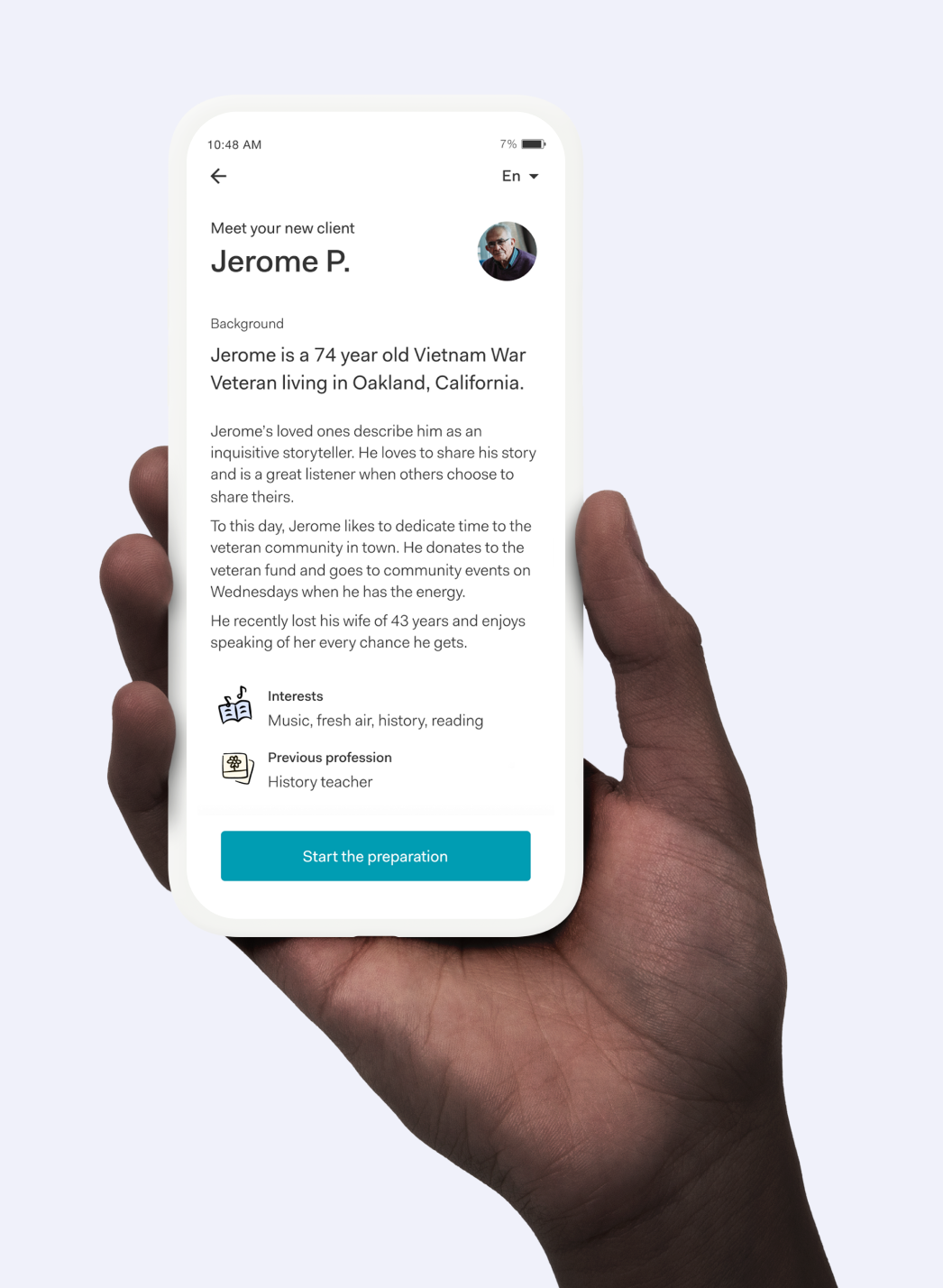
We redesigned our existing caregiver visit preparation workflow to increase engagement & preparedness of visits — driving better care delivery and client experiences. This was our first external workflow using the new framework and significantly reduced the need for operations to manually prepare caregivers via phone call or text messaging.
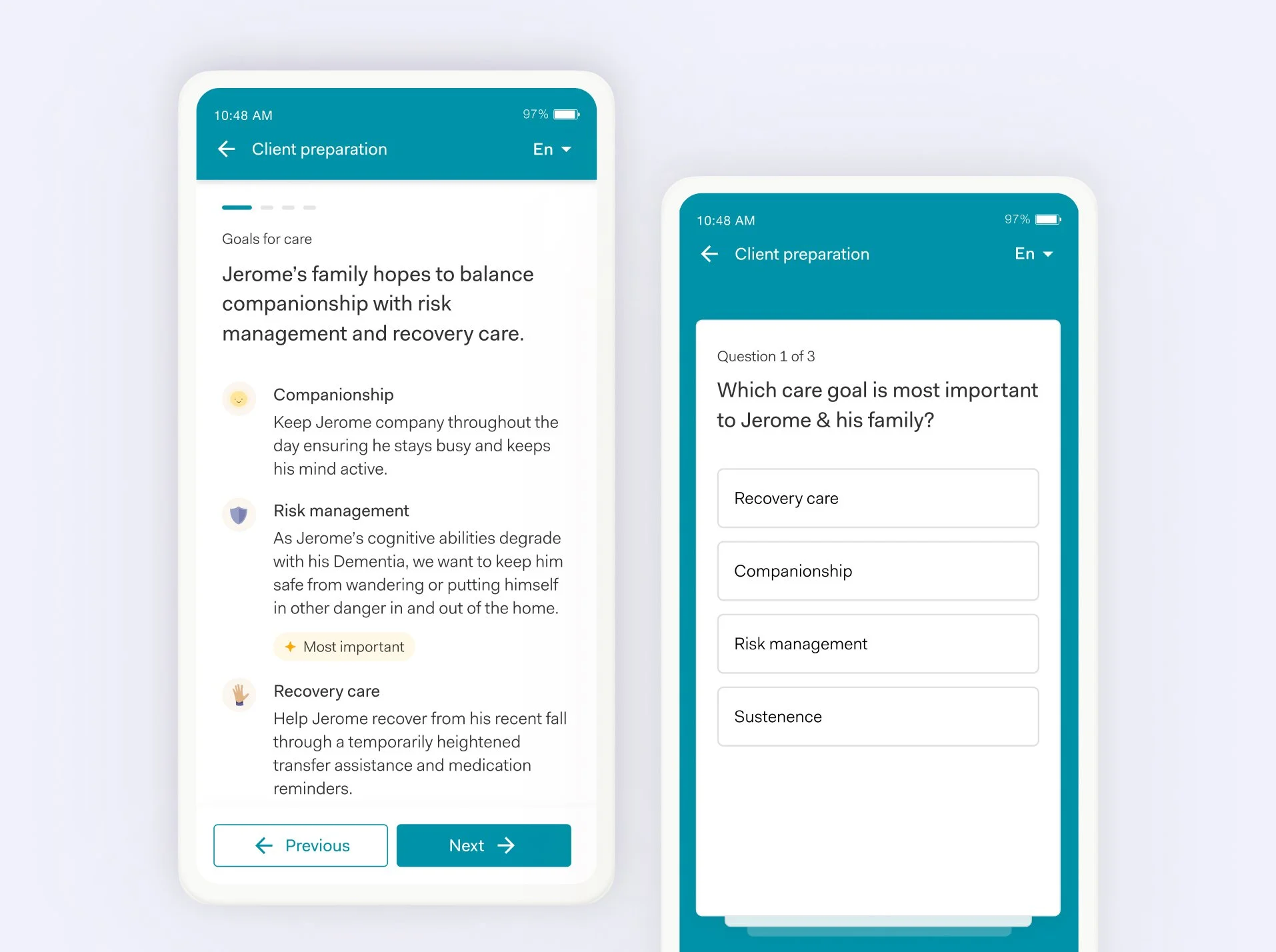
Ensuring back-up support in care delivery
The system is now able to detect if key workflows aren’t externally completed by due date and will automatically re-assign internally to our care operations team to ensure that quality care is always delivered.